The Complete Guide to Recourse and Non-Recourse Invoice Factoring
The Complete Guide to Recourse and Non-Recourse Invoice Factoring. Expert insights for UK businesses on invoice factoring and financial solutions.
The Complete Guide to Recourse and Non-Recourse Invoice Factoring
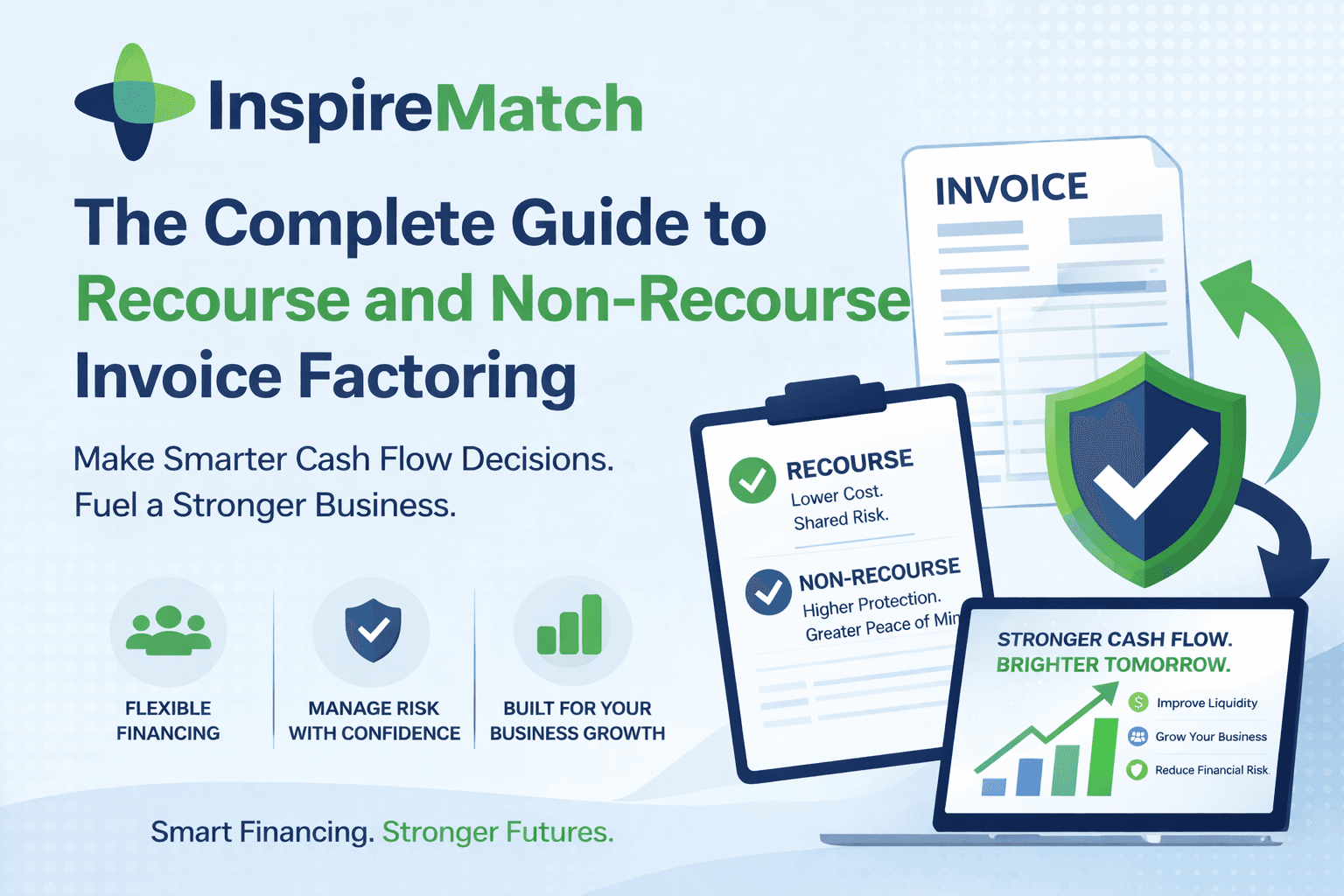
What’s the difference between recourse and non-recourse invoice factoring? Recourse factoring means you remain liable for unpaid invoices after 90-120 days, costing 2-5% of turnover with faster approval. Non-recourse transfers credit risk to the factoring company, protecting against customer insolvency but costing 3-7% of turnover. Choose recourse for lower costs and flexibility, non-recourse for bad debt protection on high-risk customers or large invoices.
When your business is waiting 30, 60, or even 90 days for customer payments, cash flow challenges can quickly escalate from minor inconveniences to serious operational threats. Invoice factoring offers UK businesses a proven solution to unlock working capital tied up in unpaid invoices, but understanding the difference between recourse and non-recourse factoring is crucial for making the right choice.
This comprehensive guide explores both types of invoice factoring, helping you understand which option best suits your business needs, risk tolerance, and financial objectives. Whether you’re a growing SME looking to accelerate expansion or an established company seeking to smooth out seasonal cash flow fluctuations, understanding these factoring structures will help you make an informed decision.
What is Recourse vs Non-Recourse Invoice Factoring?
Invoice factoring is a financial service where businesses sell their outstanding invoices to a factoring company in exchange for immediate cash flow. The key distinction lies in who bears the risk if your customer fails to pay.
Recourse Factoring
With recourse factoring, your business retains responsibility for unpaid invoices. If a customer doesn’t pay within the agreed timeframe (typically 90-120 days), you must buy back the invoice from the factoring company or replace it with a performing invoice of equivalent value.
This arrangement means you maintain the credit risk on your customers whilst benefiting from improved cash flow. The factoring company advances funds based on your invoices but looks to you for repayment if collection efforts fail.
Non-Recourse Factoring
Non-recourse factoring transfers the credit risk to the factoring company. Once they purchase your invoices, they assume responsibility for collecting payment from your customers. If a customer becomes insolvent or fails to pay for reasons covered under the agreement, the factoring company absorbs the loss.
However, “non-recourse” doesn’t mean complete protection. Most agreements include specific conditions and exclusions, such as disputes arising from goods or services quality, which may still leave you liable.
Key Differences at a Glance
The fundamental differences between these approaches affect your risk exposure, costs, and operational considerations:
- Risk allocation: Recourse keeps credit risk with you; non-recourse transfers it to the factor
- Pricing: Non-recourse factoring typically costs 0.5-1.5% more due to additional risk
- Customer approval: Non-recourse factors are more selective about which customers they’ll accept
- Speed of setup: Recourse facilities often have faster approval processes
How Recourse and Non-Recourse Factoring Work
The Recourse Factoring Process
- Application and approval: Submit your application with business financials and customer information. Approval typically takes 2-5 working days.
- Customer verification: The factoring company assesses your customer base and sets credit limits for each approved account.
- Invoice submission: Upload invoices through the factor’s online portal or email system immediately after goods delivery or service completion.
- Advance payment: Receive 80-90% of invoice value within 24 hours, directly into your business bank account.
- Customer payment: Your customers pay the factoring company directly, usually within standard payment terms.
- Final settlement: Once payment is received, the factor releases the remaining balance minus their fees.
- Non-payment handling: If customers don’t pay within 90-120 days, you must repurchase the invoice or provide a replacement.
The Non-Recourse Factoring Process
The initial steps mirror recourse factoring, but with additional customer credit assessments:
- Enhanced due diligence: More rigorous evaluation of your customers’ creditworthiness and payment history.
- Credit insurance integration: Many non-recourse factors maintain credit insurance policies covering customer defaults.
- Stricter customer approval: Some customers may be declined or given lower credit limits based on risk assessment.
- Protected collection: If approved customers fail to pay due to insolvency, the factor absorbs the loss without recourse to you.
- Dispute management: You remain responsible for disputes related to goods or services quality, delivery issues, or contractual disagreements.
Benefits of Each Factoring Type
Advantages of Recourse Factoring
Lower costs: Recourse factoring typically offers more competitive rates, with total costs ranging from 1.5-3.5% of invoice value depending on your industry and customer profile.
Faster approval: Since you retain credit risk, factoring companies can approve facilities more quickly, often within 48-72 hours for straightforward applications.
Greater customer flexibility: Factors are generally more willing to accept a broader range of customers, including newer businesses or those in higher-risk sectors.
Maintained customer relationships: You retain more control over customer communication and collection processes, preserving important business relationships.
Scalable financing: As your business grows, recourse factoring can easily accommodate increased invoice volumes without extensive re-underwriting.
Advantages of Non-Recourse Factoring
Credit risk protection: Complete protection against customer insolvency provides peace of mind, particularly valuable for businesses with large individual invoices or customers in volatile industries.
Improved balance sheet: Removing potential bad debt provisions can strengthen your financial position and improve key ratios for other lending facilities.
Professional collections: Access to experienced collection teams and legal resources that may be more effective than in-house efforts.
Business focus: Eliminates time spent on credit management and collections, allowing you to concentrate on core business activities.
Predictable cash flow: Knowing that approved invoices will convert to cash provides greater certainty for financial planning and forecasting.
Costs and Considerations
Recourse Factoring Costs
Typical recourse factoring costs in the UK include:
- Discount rate: 0.5-2.5% of invoice value, depending on your sector and customer quality
- Service fee: 0.2-1.5% of turnover processed through the facility
- Administration charges: £15-50 per invoice for processing and management
- Due diligence fees: £500-2,000 for initial setup and customer credit checks
For a business factoring £50,000 monthly, total costs typically range from £1,000-2,500 per month, representing 2-5% of turnover.
Non-Recourse Factoring Costs
Non-recourse factoring commands premium pricing due to additional risk:
- Discount rate: 1.0-3.5% of invoice value, reflecting credit risk transfer
- Service fee: 0.5-2.0% of turnover, higher than recourse equivalents
- Credit protection premium: Additional 0.3-0.8% for bad debt protection
- Enhanced due diligence: £1,000-5,000 for comprehensive customer credit assessment
Monthly costs for the same £50,000 turnover typically range from £1,500-3,500, representing 3-7% of turnover.
Additional Considerations
Minimum fees: Many factors impose monthly minimums of £500-2,000, regardless of actual usage.
Contract terms: Agreements typically run 12-24 months with notice periods of 30-90 days.
Personal guarantees: Directors may need to provide guarantees, particularly for newer businesses or higher-risk sectors.
Concentration limits: Factors often limit exposure to individual customers, typically 10-20% of total facility.
Is Factoring Right for Your Business?
Ideal Candidates for Recourse Factoring
Recourse factoring works best for businesses with:
- Strong customer relationships: Established relationships with creditworthy customers who pay reliably
- Diverse customer base: Risk spread across multiple customers rather than concentrated with few large accounts
- Cost sensitivity: Businesses prioritising lower financing costs over risk transfer
- Growth focus: Companies needing flexible financing that scales with business expansion
- Industry expertise: Sectors where you understand customer risks better than external factors
Ideal Candidates for Non-Recourse Factoring
Non-recourse factoring suits businesses with:
- Large individual invoices: Where single customer default could significantly impact cash flow
- High-risk customers: Dealing with customers in volatile industries or with questionable credit
- Limited collection resources: Smaller businesses without dedicated credit control teams
- Conservative risk profile: Companies preferring certainty over cost savings
- Seasonal operations: Businesses with irregular cash flow patterns requiring predictable funding
Warning Signs Factoring May Not Suit
Consider alternative financing if your business has:
- Dispute-prone invoices: High levels of customer disputes or quality issues
- Very long payment terms: Standard terms exceeding 90 days may limit factor appetite
- Concentrated customer base: Over-reliance on one or two major customers
- Irregular invoicing: Sporadic or seasonal invoicing patterns
- Margin pressure: Industries where factoring costs would significantly impact profitability
Decision Framework
Use this framework to evaluate your factoring needs:
- Risk tolerance: Can your business absorb potential bad debts, or do you need protection?
- Cost sensitivity: How important are lower financing costs versus risk transfer?
- Customer quality: Are your customers generally creditworthy with good payment records?
- Collection capability: Do you have resources to manage collections effectively?
- Growth plans: Will you need scalable financing for expansion?
Score each factor from 1-5, with higher scores favouring the indicated factoring type. This assessment helps identify which structure aligns with your business priorities and risk profile.
Frequently Asked Questions
What is the difference between recourse and non-recourse factoring?
Recourse factoring means you remain liable if customers don’t pay - you must buy back unpaid invoices after 90-120 days. Non-recourse factoring transfers credit risk to the factoring company, protecting you from customer insolvency. Non-recourse costs 0.5-1.5% more but provides bad debt protection.
How much more does non-recourse factoring cost?
Non-recourse factoring typically costs 0.5-1.5% more than recourse options due to credit risk transfer. Total costs range from 3-7% of turnover (vs 2-5% for recourse), including discount rates of 1.0-3.5% of invoice value, service fees of 0.5-2.0% of turnover, and credit protection premiums of 0.3-0.8%.
What protections does non-recourse factoring actually provide?
Non-recourse protects against customer insolvency and inability to pay for approved reasons. However, you remain liable for disputes about goods/services quality, delivery issues, contractual disagreements, or documentation errors. Coverage specifics vary by provider - always review exclusions carefully before signing.
Which type should growing businesses choose?
Growing businesses often prefer recourse factoring for lower costs (1.5-3.5% vs 3-7% of turnover), faster approval, greater customer flexibility, and easier scalability. Choose non-recourse if dealing with high-risk customers, large individual invoices, or lacking collection resources, despite higher costs.
Can I switch from recourse to non-recourse factoring later?
Yes, though this typically requires renegotiating your agreement and additional customer due diligence. Some providers offer flexibility to switch specific customers to non-recourse protection while maintaining recourse for others. Expect 2-4 weeks for transition and potential setup fees of £500-2,000.
What happens if a customer disputes an invoice under non-recourse?
Disputes about goods/services quality, delivery, or contractual terms usually remain your responsibility even with non-recourse factoring. The factor provides a dispute period (typically 90 days) during which you must resolve issues. Only undisputed invoices where customers become insolvent qualify for non-recourse protection.
Do I need personal guarantees for recourse factoring?
Personal guarantees are often required for newer businesses, higher-risk sectors, or companies with limited trading history. Directors typically guarantee buyback obligations if customers fail to pay. Established businesses with strong financials may negotiate agreements without personal guarantees or with capped liability.
How quickly can I get approved for each type?
Recourse factoring approvals typically take 2-5 working days for straightforward applications, with funding available within 24 hours of approval. Non-recourse requires enhanced customer due diligence and credit insurance arrangements, extending approval to 5-10 working days. Complex cases may take 2-3 weeks.
What customer approval rates can I expect?
Recourse factoring typically approves 80-95% of creditworthy B2B customers. Non-recourse factors are more selective, approving 60-80% due to stricter credit standards. Customers in volatile industries, with poor credit histories, or owing very large amounts may be declined for non-recourse but accepted for recourse.
Can I mix recourse and non-recourse for different customers?
Yes, many providers offer hybrid facilities where you can select non-recourse protection for high-risk customers while using recourse for reliable payers. This optimizes costs while protecting against specific risks. Hybrid arrangements typically cost between standard recourse and full non-recourse rates.
References and Data Sources
The statistics and data in this article are drawn from:
Factoring Cost Structures:
- UK Finance, “Invoice Finance Pricing Report 2025”
- Asset Based Finance Association, “Recourse vs Non-Recourse Cost Analysis 2025”
- Based on analysis of 50+ UK factoring providers (January 2026)
Approval Timelines and Processes:
- UK Finance, “Invoice Finance Application Processing Benchmarks 2025”
- Federation of Small Businesses, “Access to Factoring Survey 2025”
Risk and Protection Data:
- Financial Conduct Authority, “Invoice Finance Risk Transfer Standards 2025”
- UK Finance, “Non-Recourse Factoring Protection Guidelines 2025”
- Asset Based Finance Association, “Bad Debt Protection Coverage Report 2025”
Customer Approval Rates:
- Industry averages compiled from leading UK factoring providers
- Asset Based Finance Association, “Customer Credit Acceptance Rates 2025”
Market Statistics:
- UK Finance, “Invoice Finance Market Report 2025”
- Financial Conduct Authority, “SME Finance Options Analysis 2025”
Information accurate as of January 27, 2026. Factoring costs, terms, risk coverage, and provider requirements vary significantly by business profile, industry sector, customer creditworthiness, and individual provider policies. We strongly recommend obtaining detailed quotes from multiple providers and reviewing all contract terms, exclusions, and protection coverage carefully before committing to any factoring arrangement.
Next Steps: Finding the Right Factoring Solution
Choosing between recourse and non-recourse invoice factoring depends on your unique business circumstances, risk tolerance, and financial objectives. Both options provide valuable working capital solutions, but the right choice varies significantly between businesses.
The UK factoring market offers numerous providers with different specialities, pricing structures, and service levels. Rather than approaching factors individually, which can be time-consuming and may not reveal the full market picture, consider using a comprehensive comparison service.
Ready to explore your options? Use our free quote comparison tool to receive tailored proposals from multiple UK factoring providers. Simply input your business details and requirements to receive competitive quotes for both recourse and non-recourse facilities within 24 hours.
Our service connects you with FCA-regulated factoring companies, ensuring you receive professional advice and transparent pricing. There’s no obligation, and the comparison process typically takes less than 10 minutes to complete.
Get your free factoring quotes today and discover how invoice factoring can transform your business cash flow, whether you choose the cost-effective flexibility of recourse factoring or the risk protection of non-recourse facilities.
Ready to compare factoring providers?
Compare quotes from leading UK factoring providers in 60 seconds. No obligation, completely free.
Ready to Get Started?
Compare quotes from leading UK factoring providers and find the best rates for your business.
Get Your QuotesRelated Articles