Bad Debt Protection: Understanding Non-Recourse Factoring
Bad Debt Protection: Understanding Non-Recourse Factoring. Expert insights for UK businesses on invoice factoring and financial solutions.
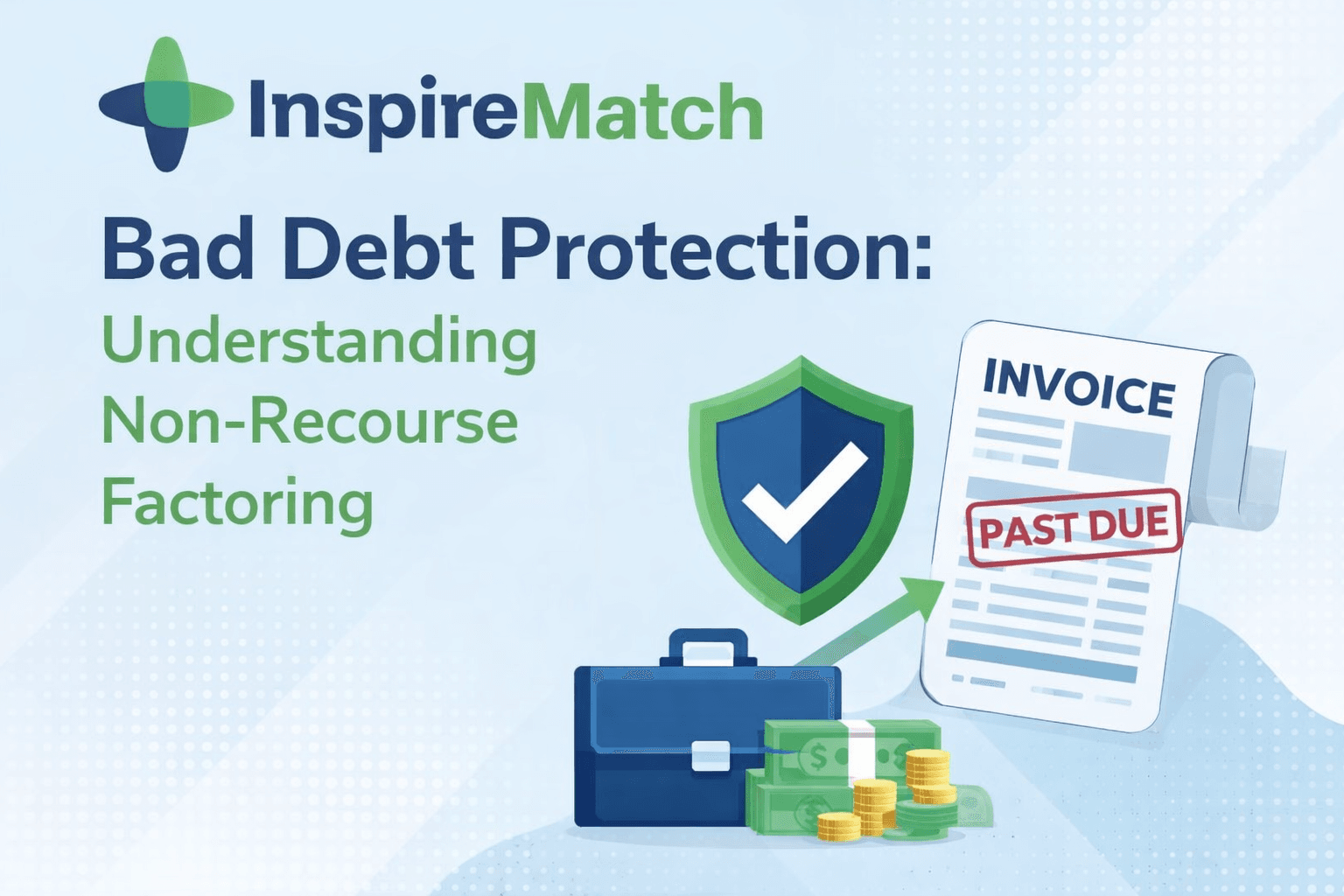
Bad Debt Protection: Understanding Non-Recourse Factoring
What exactly is non-recourse factoring and how does it protect UK businesses from bad debt? Non-recourse factoring is a form of invoice factoring where the finance provider assumes responsibility for customer defaults, protecting your business from bad debt losses. Unlike recourse factoring, you won’t need to repay funds if an approved customer fails to pay their invoice. This protection typically costs an additional 0.5-1.5% in fees but can save businesses thousands in write-offs – particularly valuable when 23% of UK business failures cite bad debt as a contributing factor.
For many UK businesses, unpaid invoices represent one of the biggest threats to cash flow stability. A single large customer default can devastate smaller companies, while even established businesses struggle when payment delays stretch beyond 60 days. This reality has made bad debt protection increasingly attractive to finance directors seeking both immediate cash flow relief and long-term security.
Non-recourse factoring addresses both concerns simultaneously. You get immediate access to invoice value while transferring the risk of customer non-payment to a specialist finance provider. It’s not the cheapest form of invoice factoring, but for businesses with concerns about customer creditworthiness or those operating in volatile sectors, the peace of mind often justifies the additional cost.
What is Non-Recourse Factoring?
Non-recourse factoring is a specialized form of invoice financing where the factoring company purchases your invoices and assumes full responsibility for collecting payment from your customers. If an approved customer fails to pay due to insolvency or genuine inability to pay, you keep the funds already advanced – the loss falls entirely on the factor.
This differs significantly from recourse factoring, where you remain liable for unpaid invoices. With recourse arrangements, if a customer doesn’t pay after 90-120 days, you must either find a replacement invoice of equivalent value or repay the advance plus fees.
The “non-recourse” element specifically covers credit risk – situations where customers cannot pay due to financial difficulties. However, most agreements include important exceptions. You’ll typically remain responsible for disputes arising from delivery issues, quality problems, or invoice discrepancies. The protection applies to “clean” invoices that customers simply cannot afford to pay.
UK factoring companies offering non-recourse facilities maintain detailed credit assessment processes. They’ll evaluate your customers’ creditworthiness before approving invoices for non-recourse treatment. Not every customer or invoice qualifies – factors are essentially providing credit insurance alongside financing.
How Non-Recourse Factoring Works
The process begins with your factor conducting credit checks on your customers. Each customer receives a credit limit – the maximum value of invoices the factor will purchase on a non-recourse basis. These limits get reviewed regularly, typically every six months or when significant changes occur in customer circumstances.
Once approved, you submit invoices as normal. The factor advances 70-90% of invoice value within 24-48 hours, holding the remainder as security. Your customers pay the factor directly, though some arrangements allow you to collect payments and pass them through.
Here’s where non-recourse protection kicks in: if an approved customer becomes insolvent or demonstrates genuine inability to pay, the factor absorbs the loss. You keep the advance and aren’t required to find replacement invoices or repay funds. The factor writes off the debt as part of their credit risk management.
The security reserve gets released when customers pay or when the factor confirms a covered default. For paid invoices, you receive the reserve minus factoring fees. For covered defaults, the reserve typically gets released after 90-180 days, depending on your agreement terms.
Credit limit management remains crucial throughout. Factors monitor customer payment behavior and financial health continuously. They might reduce or withdraw credit limits if customer circumstances deteriorate, affecting future invoice purchases but not existing advances.
Benefits of Non-Recourse Factoring
The primary advantage is obvious – complete protection from approved customer defaults. This security proves particularly valuable for businesses with concentrated customer bases or those operating in economically sensitive sectors. Manufacturing companies supplying construction firms, for example, often choose non-recourse facilities given the sector’s volatility.
Cash flow predictability improves dramatically. You can forecast collections with greater confidence, knowing that approved invoices will generate cash regardless of customer payment performance. This certainty helps with budgeting, investment decisions, and growth planning.
Administrative burden reduces significantly compared to managing your own credit control. The factor handles customer credit assessments, payment chasing, and bad debt provisions. Many businesses find this frees up considerable management time for core activities.
The credit expertise factors bring often exceeds what smaller businesses can maintain internally. Professional credit teams use sophisticated assessment tools, maintain extensive databases, and monitor customer financial health continuously. They spot warning signs earlier and make more informed credit decisions.
For businesses with international customers, non-recourse factoring can provide protection against currency fluctuations and foreign credit risks that would be difficult to manage independently. Some factors offer specific expertise in particular export markets.
Balance sheet improvements represent another significant benefit. Bad debt provisions disappear, and the contingent liability for customer defaults transfers to the factor. This can improve key financial ratios and make your business more attractive to other lenders or investors.
Costs and Considerations
Non-recourse factoring typically costs 0.5-1.5% more than recourse facilities, reflecting the additional credit risk the factor assumes. Total fees usually range from 2.5-4.5% of invoice value, depending on your sector, customer base, and invoice values. Annual turnover requirements often start around £500,000, though some specialists work with smaller businesses.
The credit assessment process can be more rigorous than recourse factoring. Factors scrutinize your customers carefully before approving credit limits. Businesses with weak customer bases might find limited appetite from non-recourse providers, or face significantly higher fees.
Coverage exclusions require careful attention. Most agreements exclude disputes, warranty claims, and situations where you haven’t fulfilled contractual obligations. Some factors also exclude specific customer types or geographic regions. Political risk coverage for international invoices often costs extra.
Concentration limits frequently apply – factors might restrict exposure to individual customers or sectors. If 40% of your sales go to one customer, the factor might only provide non-recourse cover for a portion of those invoices. This protects the factor but might leave you partially exposed.
Customer relationship considerations matter too. Some businesses worry about factors contacting customers directly, potentially affecting commercial relationships. However, most professional factors handle collections diplomatically, and many customers expect invoice factoring in certain sectors.
The qualification process can take several weeks as factors assess your business and key customers. This timeline might not suit businesses needing immediate funding, though some providers offer interim recourse facilities while non-recourse approval progresses.
Is Non-Recourse Factoring Right for Your Business?
Non-recourse factoring suits businesses where bad debt risk justifies the additional cost. Companies with customers in financially volatile sectors – retail, hospitality, construction – often find the protection valuable. Similarly, businesses with high invoice values where a single default could cause serious damage benefit from the security.
Export businesses frequently choose non-recourse facilities, particularly when selling to markets with different legal systems or economic conditions. The complexity and cost of pursuing overseas debtors makes the upfront protection attractive.
Growing businesses sometimes use non-recourse factoring during expansion phases when they’re taking on new customers without extensive credit histories. The factor’s expertise helps assess unfamiliar prospects while providing protection against poor decisions.
However, non-recourse factoring isn’t suitable for every situation. Businesses with excellent customer relationships, strong credit control processes, and historically low bad debt levels might find the additional cost unjustified. Service businesses where disputes are common may struggle with the coverage exclusions.
The customer approval process can constrain business development. If factors reject key prospects or impose low credit limits, you might need to seek alternative arrangements or accept recourse facilities for those relationships.
Consider your risk tolerance carefully. Some businesses prefer paying higher fees for certainty, while others accept bad debt risk in exchange for lower costs. There’s no universally correct answer – it depends on your financial position, growth plans, and management preferences.
Frequently Asked Questions
What is the difference between recourse and non-recourse factoring?
With recourse factoring, you remain responsible for unpaid invoices – if customers don’t pay, you must repay the advance or provide replacement invoices. Non-recourse factoring transfers this risk to the factor, who absorbs losses from approved customer defaults. Non-recourse typically costs 0.5-1.5% more but provides complete protection from covered bad debts.
How much does non-recourse factoring cost in the UK?
Total fees typically range from 2.5-4.5% of invoice value, including both the factoring fee and bad debt protection premium. The protection element usually adds 0.5-1.5% compared to recourse facilities. Exact costs depend on your sector risk, customer creditworthiness, and invoice values. Most providers require minimum annual turnover of £500,000-£1 million.
What situations are excluded from non-recourse protection?
Most agreements exclude customer disputes, warranty claims, delivery problems, and situations where you haven’t fulfilled contractual obligations. Set-offs, contra accounts, and pre-existing customer relationships might also be excluded. The protection typically covers only “clean” invoices where customers cannot pay due to insolvency or genuine financial inability.
How long does it take to get non-recourse factoring approved?
Initial approval typically takes 2-4 weeks as factors assess your business and key customers’ creditworthiness. Customer credit limit approvals can take 3-7 days for each new account. Some providers offer interim recourse facilities while non-recourse assessment progresses. Complex cases or international customers may require additional time for due diligence.
Can I choose which invoices receive non-recourse protection?
Most facilities operate on an “all or nothing” basis for approved customers – once a customer has a non-recourse credit limit, all qualifying invoices must be factored through the same arrangement. However, you can often exclude specific customers from the facility entirely if you prefer to maintain direct relationships or accept the credit risk yourself.
What happens if my customer disputes an invoice under non-recourse factoring?
Disputes typically fall outside non-recourse protection. You’ll need to resolve the dispute with your customer and may be required to repay the advance if the dispute is upheld. Factors usually allow reasonable time for dispute resolution but will treat unresolved disputes as recourse situations after 90-120 days.
Do I need to tell my customers about non-recourse factoring?
Yes, customers typically receive notification that their invoices have been assigned to the factor and must pay the factor directly. However, professional factors handle this diplomatically and many customers expect invoice factoring in certain sectors. Some providers offer “confidential” arrangements where you collect payments on the factor’s behalf.
What minimum credit rating do my customers need for non-recourse approval?
Requirements vary by factor, but customers typically need satisfactory credit ratings and trading histories. Factors might accept newer businesses with strong directors’ guarantees or established companies with temporary difficulties. Credit limits often reflect the factor’s confidence level – higher-risk customers receive lower limits or higher fees.
Can non-recourse factoring help with international customers?
Yes, many factors offer non-recourse protection for overseas customers, though this often costs extra and may involve longer approval processes. Some factors specialize in particular export markets and can provide valuable local credit intelligence. Currency risk protection might be available as an additional service.
How quickly can I access funds with non-recourse factoring?
Once approved, funds are typically available within 24-48 hours of submitting invoices. The initial setup process takes longer due to customer credit assessments, but ongoing funding operates at similar speeds to recourse factoring. Some providers offer same-day funding for established clients with pre-approved customers.
References and Data Sources
Industry Statistics and Market Data:
- UK Finance Annual Report 2025 - Invoice Factoring Market Analysis
- British Business Bank SME Finance Markets Report 2025
- Asset Based Finance Association Annual Statistics 2025
- Experian UK Business Failure Analysis 2025
Cost and Fee Information:
- UK Finance Benchmarking Study - Invoice Factoring Costs 2025
- Competition and Markets Authority - SME Banking Review 2025
- Financial Conduct Authority - High-Cost Credit Review 2025
Regulatory and Compliance Information:
- Financial Conduct Authority Consumer Credit Sourcebook 2025
- UK Finance Code of Conduct for Asset Based Finance 2025
- Insolvency Service - Corporate Insolvency Statistics 2025
Credit Risk and Bad Debt Data:
- Creditsafe UK Business Risk Report 2025
- Dun & Bradstreet UK Payment Analysis 2025
- R3 Association of Business Recovery Professionals Survey 2025
Information accurate as of January 2025. Market conditions and specific terms vary by provider. Businesses should seek independent advice and compare multiple quotes before making financing decisions.
Next Steps
If you’re considering non-recourse factoring for your business, the key is comparing offers from multiple providers to find the best combination of rates, terms, and service quality. Each factor has different risk appetites, sector expertise, and pricing structures.
Start by gathering your recent sales ledger, customer payment history, and financial statements. Most factors will want to see 12 months of trading data and understand your customer base composition. Having this information ready speeds up the assessment process significantly.
Use our comparison tool to get quotes from leading UK factoring providers. You’ll receive personalized proposals based on your specific circumstances, allowing you to evaluate both costs and coverage terms. The process is confidential and doesn’t impact your credit rating.
Remember, non-recourse factoring is a significant financial commitment that affects customer relationships and business operations. Take time to understand the terms fully and consider how the arrangement fits with your growth plans and risk management strategy.
Ready to compare factoring providers?
Compare quotes from leading UK factoring providers in 60 seconds. No obligation, completely free.
Ready to Get Started?
Compare quotes from leading UK factoring providers and find the best rates for your business.
Get Your QuotesRelated Articles