Invoice Factoring Companies UK: Compare the Best Providers
Compare invoice factoring companies in the UK and learn how to choose the right provider based on costs, contract terms, sector experience, customer service and funding flexibility.
Choosing the right invoice factoring company can make a major difference to your cash flow, funding flexibility and overall cost of finance.
The best provider for your business will depend on your sector, invoice values, customer payment terms, turnover, funding needs and whether you want a disclosed or confidential facility.
This guide explains what to look for in UK invoice factoring companies, how providers usually differ and how to choose the right option for your business.
Short answer
The best invoice factoring company is not always the cheapest provider. The right choice depends on how quickly you need funding, how much control you want over customer relationships, the fees involved, the contract terms and whether the provider understands your sector.
Businesses should compare invoice factoring companies based on:
- Funding speed
- Advance rates
- Service fees
- Discount charges
- Contract length
- Sector experience
- Customer support
- Customer collection process
- Confidential finance options
Best invoice factoring companies in the UK
There is no single invoice factoring company that is best for every business. Some providers are better suited to small businesses that need fast funding, while others are stronger for larger companies, sector-specific facilities or more complex finance requirements.
When comparing UK invoice factoring companies, look beyond the headline rate. The right provider should offer a clear fee structure, flexible funding limits, reliable customer service and terms that match the way your business operates.
Common types of providers include:
- Independent invoice factoring companies
- Banks and larger invoice finance providers
- Specialist sector-focused finance providers
- Brokers or comparison services that help businesses review multiple options
A good invoice factoring provider should make it clear how much funding you can access, how quickly funds can be released, what fees apply and how customer collections will be handled.
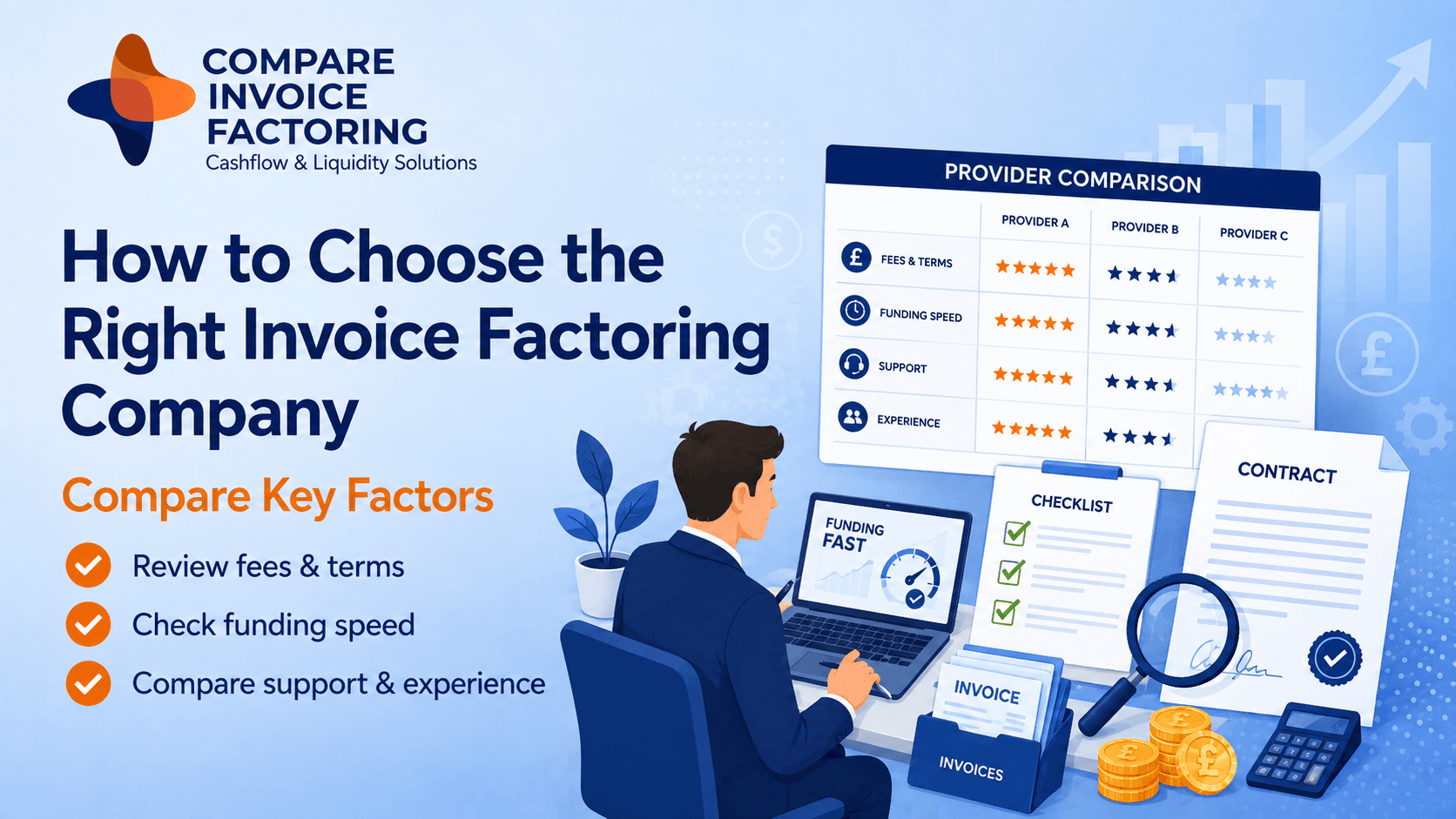
What to compare when reviewing invoice factoring providers
When comparing invoice factoring companies, it helps to look at the areas that affect cost, flexibility and day-to-day service.
Funding speed
Check how quickly funds can be released after invoices are raised. Some providers may be able to release funds faster once the facility is set up, while others may have longer approval or processing times.
Advance rate
Check what percentage of each invoice value the provider can fund upfront. A higher advance rate may improve cash flow, but it should still be reviewed alongside the full cost of the facility.
Fees and charges
Review service fees, discount charges, setup fees and any additional costs. The headline rate does not always show the true cost of invoice factoring.
Contract length
Check whether the agreement is flexible or tied into a longer-term contract. Notice periods, minimum terms and early exit charges can affect whether the facility remains suitable over time.
Sector experience
Look for providers that regularly work with businesses in your industry. A provider with sector experience may better understand your payment cycles, customer base and cash flow pressures.
Customer collections
Understand how the provider handles payment collection from your customers. This is important because the collection process can affect customer relationships.
Confidential options
Check whether confidential invoice factoring or invoice discounting is available. This may be important if you want to keep the finance arrangement less visible to customers.
Support quality
Consider how easy it is to contact the provider, resolve issues and get practical support when needed.
The cheapest invoice factoring company is not always the best option. A provider with slightly higher fees may still be better if they offer faster funding, clearer terms, stronger support or more suitable sector experience.
How to choose the right invoice factoring company
Choosing the right invoice factoring company starts with understanding what your business needs from the facility.
Some businesses need faster access to cash because customers take 30, 60 or 90 days to pay. Others need a provider that can support growth, handle larger invoice values or provide more flexible terms as turnover increases.
Before choosing a provider, consider:
- How much funding you need
- How quickly you need funds
- How much control you want over collections
- Whether customers will know
- Your sector and customer base
- The full cost of the agreement
- Contract length and notice periods
- Setup fees, minimum fees and exit charges
- Whether the provider can support future growth
The right invoice factoring company should be clear about the facility, transparent about costs and realistic about whether the product is suitable for your business.
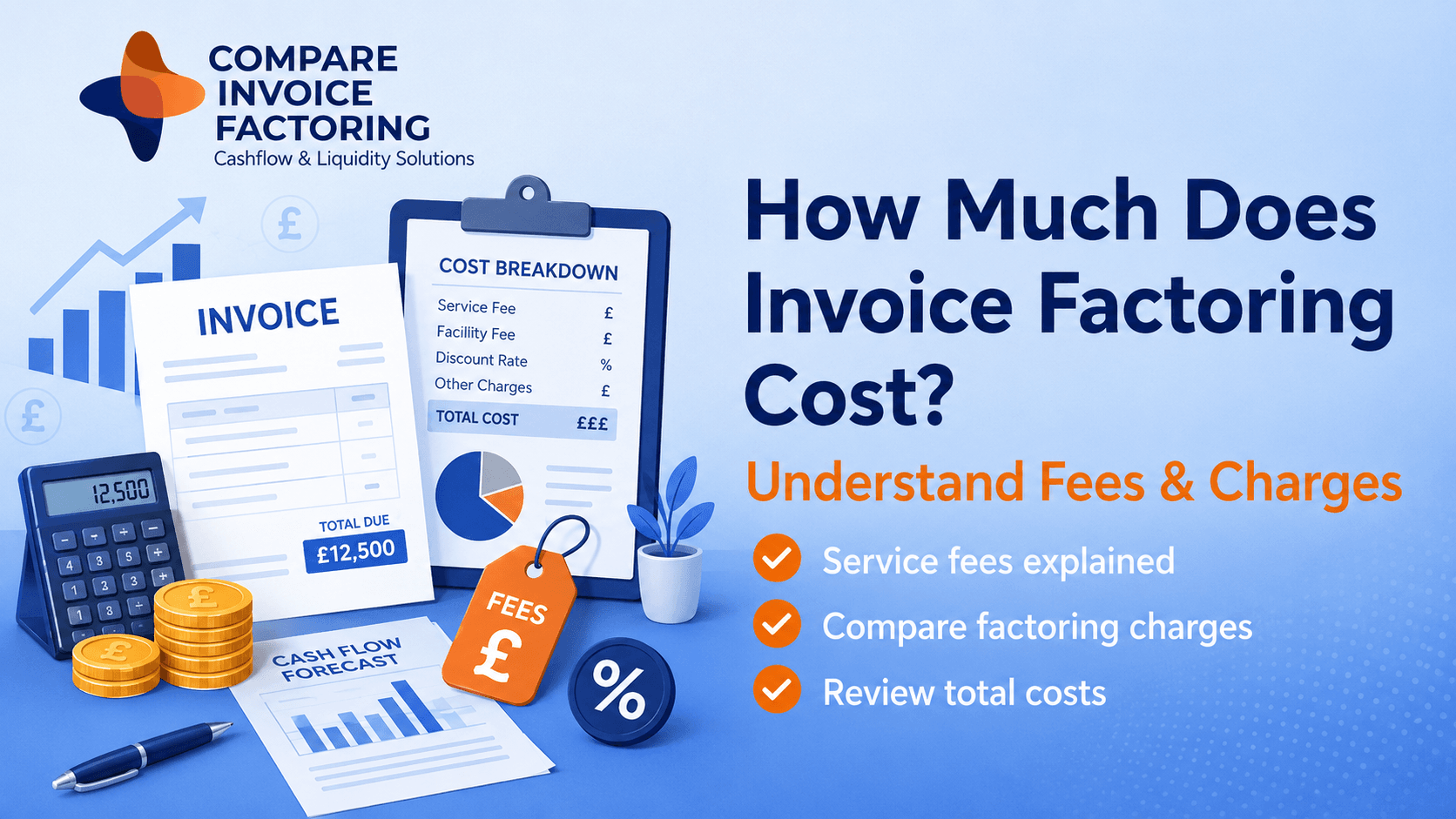
Invoice factoring costs and fees
Invoice factoring costs can vary depending on the provider, the size of your business, your invoice values, customer payment behaviour and the level of service required.
Most invoice factoring facilities include two main types of cost.
Service fee
This is usually charged for managing the facility. It may cover administration, account handling and customer collections.
Discount charge
This is usually linked to the amount of funding advanced and how long the money is borrowed before the customer pays the invoice.
Other possible costs include:
- Setup fees
- Minimum monthly fees
- Credit protection fees
- Termination fees
- Charges for additional services
- Early exit charges
- Bad debt protection fees
This is why it is important to compare invoice factoring costs carefully before choosing a provider. A lower headline rate does not always mean the overall facility will be cheaper.
Businesses should ask each provider for a clear breakdown of:
- Service fees
- Discount charges
- Minimum monthly fees
- Setup or arrangement fees
- Contract length
- Notice periods
- Any early exit charges
- Any charges for bad debt protection or additional services
If your business is mainly comparing providers based on cost, it is worth reviewing invoice factoring fees alongside service quality, flexibility and funding speed.
Industry-specific considerations
Invoice factoring can work differently depending on the sector your business operates in.
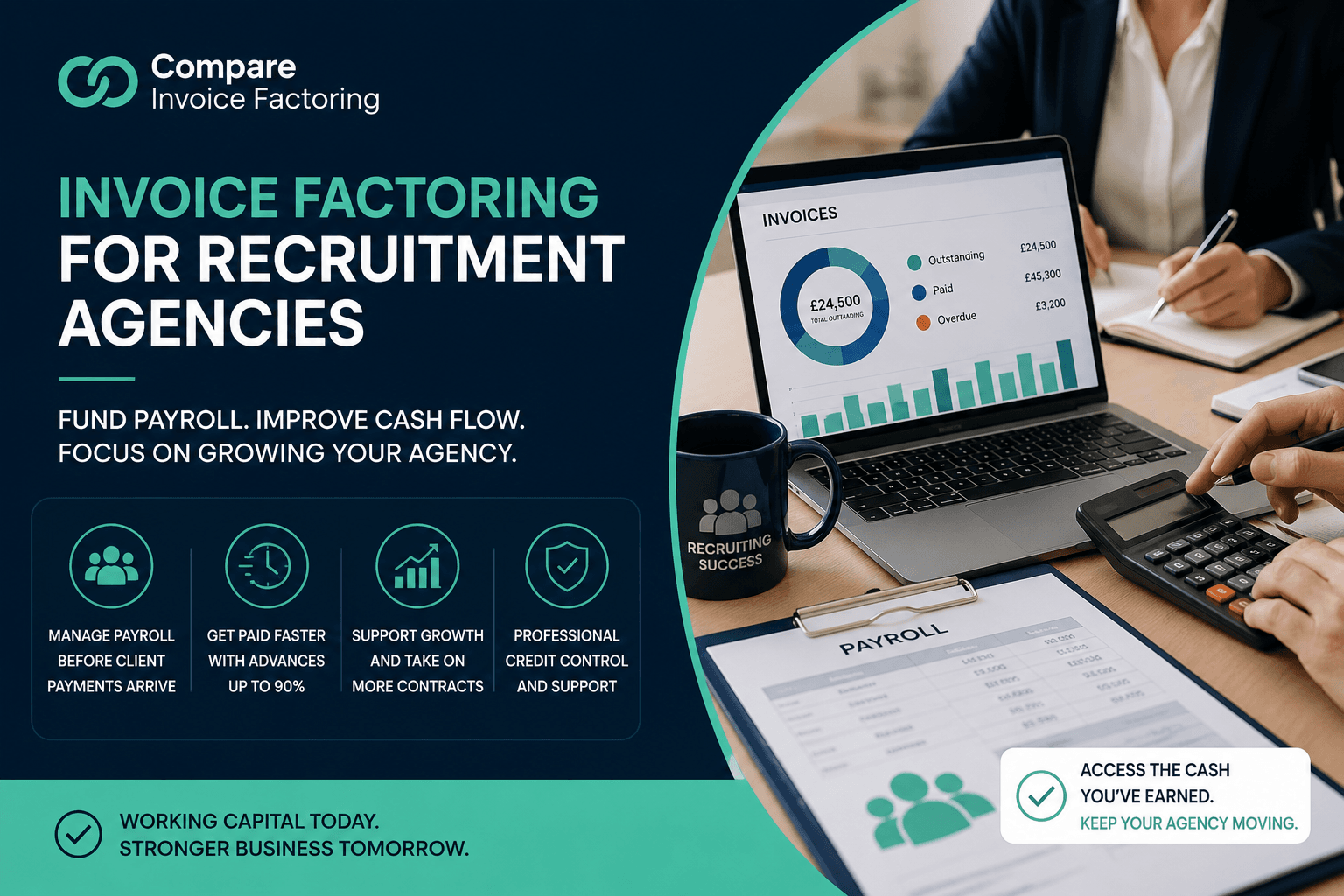
For example, a recruitment agency may need funding to cover payroll before clients settle invoices. A manufacturing business may need cash flow support to buy materials, manage supplier payments or handle longer production cycles.
Sector experience can matter because payment cycles, invoice values and customer relationships are not the same across every industry.
When comparing invoice factoring providers, it is worth asking whether they have experience with businesses like yours.
Important sector-specific considerations include:
- Typical customer payment terms
- Average invoice value
- How often invoices are raised
- Whether customers are large businesses or smaller clients
- Whether funding is needed for growth, stability or seasonal pressure
- Whether customer relationships need to be handled carefully
- Whether confidential finance options are important
A provider that understands your sector may be better placed to offer practical support and suitable terms.
Pros and cons of invoice factoring
Invoice factoring can be useful for businesses that need faster access to cash tied up in unpaid invoices. However, it is not the right option for every company.
Pros of invoice factoring:
- It can improve cash flow by releasing funds before customers pay.
- It can help businesses manage late or slow-paying customers.
- It may support growth by making working capital available sooner.
- It can reduce time spent chasing payments if the provider handles collections.
- It can be easier to access than some traditional finance options, depending on the business and invoice book.
Cons of invoice factoring:
- It adds an extra cost to the business.
- Some customers may know that a factoring provider is involved.
- Contract terms can vary and may include minimum fees or notice periods.
- It may not be suitable if your business has poor-quality invoices or customers with weak credit profiles.
- The provider’s collection process can affect customer relationships if not handled carefully.
The best approach is to compare invoice factoring companies based on both cost and suitability, rather than choosing only by the lowest advertised fee.
Invoice factoring vs invoice discounting
Invoice factoring and invoice discounting are both types of invoice finance, but they are not exactly the same.
Invoice factoring usually includes:
- Funding against unpaid invoices
- Customer collections support
- Credit control involvement from the provider
- A more visible relationship between the provider and your customers
Invoice discounting usually includes:
- Funding against unpaid invoices
- More control over customer collections
- Less visible involvement from the finance provider
- A stronger fit for businesses with existing credit control processes
With invoice factoring, the provider usually advances funds against unpaid invoices and may also manage customer collections. This can be useful for businesses that want funding and support with credit control.
With invoice discounting, the business usually keeps more control over customer collections. This may be more suitable for companies that already have strong internal credit control and want the finance arrangement to remain less visible to customers.
The right option depends on how much control your business wants, whether confidentiality matters and how much support you need with collections.
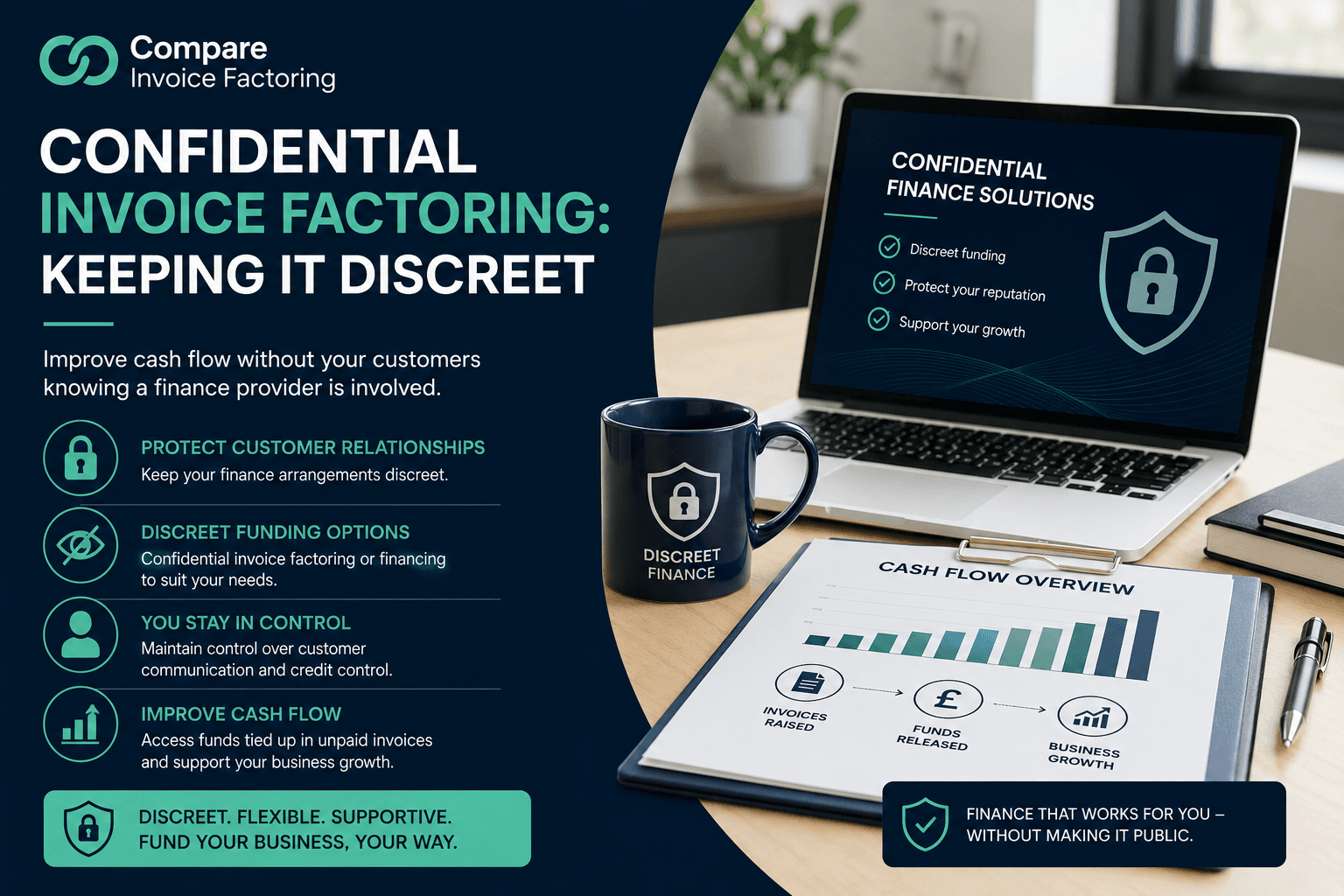
Can invoice factoring be confidential?
Invoice factoring is often disclosed, meaning customers may be aware that a finance provider is involved.
However, confidential invoice finance options may be available depending on the provider, your business profile and the type of facility used.
Confidential invoice discounting is often more common than confidential factoring, because the business usually keeps control of customer collections. That said, some providers may offer confidential or discreet solutions for suitable businesses.
If confidentiality is important, ask providers early in the comparison process. This avoids wasting time with facilities that do not match how you want to manage customer relationships.
FAQs
What is the best invoice factoring company in the UK?
The best invoice factoring company in the UK depends on your business size, sector, invoice values, customer payment terms and funding needs. The right provider should offer clear fees, suitable funding limits, reliable support and terms that match how your business operates.
How do I compare invoice factoring companies?
Compare invoice factoring companies by looking at funding speed, advance rates, service fees, discount charges, contract length, customer collection process, sector experience and support quality. It is important to compare the full facility, not just the headline rate.
How much does invoice factoring cost?
Invoice factoring costs usually include a service fee and a discount charge. Some providers may also charge setup fees, minimum monthly fees, credit protection fees or termination fees. The total cost depends on your business, invoice values, customer risk and the terms of the facility.
Is invoice factoring suitable for small businesses?
Invoice factoring can be suitable for small businesses that invoice other businesses and need faster access to cash. It may be useful where customers take several weeks or months to pay. However, small businesses should check contract terms, minimum fees and whether the facility is affordable.
What is the difference between invoice factoring and invoice discounting?
Invoice factoring usually includes funding and customer collections support. Invoice discounting usually gives the business more control over collections and may be more confidential. The right option depends on whether you want support with credit control or prefer to manage customer relationships directly.
Can invoice factoring be confidential?
Some invoice finance options can be confidential, but this depends on the provider and the type of facility. Confidential invoice discounting is often more common than confidential factoring. If confidentiality is important, it should be discussed before choosing a provider.
Compare invoice factoring companies
Finding the right invoice factoring company is about more than choosing the cheapest option. The best provider should suit your cash flow needs, customer base, sector and preferred way of managing collections.
Compare Invoice Factoring helps UK businesses understand their options and review providers with more confidence.
If you are considering invoice factoring, compare providers carefully and make sure you understand the full cost, contract terms and level of support before making a decision.
Ready to compare factoring providers?
Compare quotes from leading UK factoring providers in 60 seconds. No obligation, completely free.
Ready to Get Started?
Compare quotes from leading UK factoring providers and find the best rates for your business.
Get Your QuotesRelated Articles