How Manufacturing Companies Use Invoice Factoring to Scale Operations
How Manufacturing Companies Use Invoice Factoring to Scale Operations. Expert insights for UK businesses on invoice factoring and financial solutions.
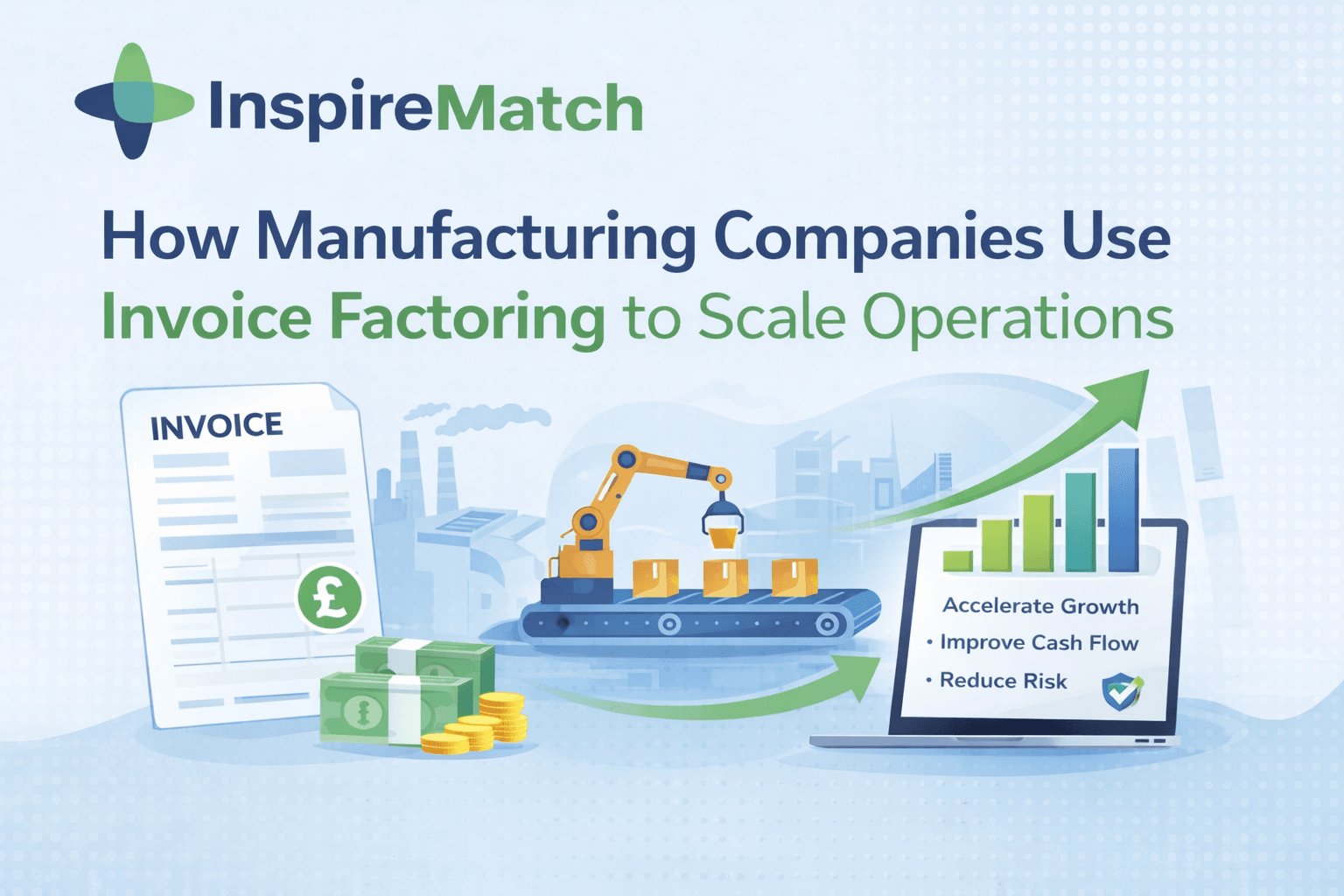
How Manufacturing Companies Use Invoice Factoring to Scale Operations
How do manufacturers use invoice factoring to scale operations? Manufacturers sell outstanding invoices to access 70-90% of invoice value within 24 hours, converting 30-90 day payment terms into immediate working capital. This enables purchasing raw materials, meeting payroll, securing supplier discounts, and accepting larger orders without waiting for customer payments, with funding automatically scaling as sales increase.
Manufacturing companies face a unique challenge in today’s competitive marketplace: they need consistent cash flow to purchase raw materials, pay suppliers, and meet payroll, yet their customers often demand extended payment terms of 30, 60, or even 90 days. This cash flow gap can severely limit a manufacturer’s ability to scale operations, take on larger orders, or invest in new equipment.
Invoice factoring has emerged as a practical solution for UK manufacturers looking to bridge this gap and accelerate growth. Rather than waiting months for customer payments, manufacturers can access up to 90% of their invoice value within 24 hours, providing the working capital needed to seize new opportunities and expand operations efficiently.
What is Invoice Factoring for Manufacturing Companies?
Invoice factoring is a financial service where manufacturers sell their outstanding invoices to a specialist finance company (called a factor) at a discount. The factor provides immediate cash against these invoices, typically advancing 70-90% of the invoice value upfront.
For manufacturing businesses, this arrangement transforms unpaid invoices from dormant assets into active working capital. Instead of waiting for customers to pay on their standard terms, manufacturers receive immediate funds to reinvest in their operations.
The process is particularly well-suited to manufacturing because these businesses typically have:
- Large invoice values from substantial orders
- Creditworthy customers (other businesses or retailers)
- Predictable sales cycles
- Significant working capital requirements
Unlike traditional bank loans, invoice factoring doesn’t create debt on the balance sheet. Instead, it’s considered a sale of assets, making it an attractive option for manufacturers who may already have existing lending facilities or prefer not to take on additional borrowing.
How Invoice Factoring Works for Manufacturers
The invoice factoring process for manufacturing companies follows a straightforward sequence:
1. Initial Setup and Credit Assessment
The factor evaluates both the manufacturing company and its customer base. They’ll assess the creditworthiness of major customers and establish credit limits for each. This process typically takes 1-2 weeks for established manufacturers.
2. Invoice Submission
When the manufacturer completes an order and issues an invoice, they submit it to the factor (usually through an online portal). The factor verifies the invoice details and confirms it meets their criteria.
3. Immediate Funding
Within 24 hours, the factor advances 70-90% of the invoice value directly to the manufacturer’s bank account. This immediate injection of cash allows the manufacturer to:
- Purchase raw materials for the next production run
- Pay suppliers promptly to secure better terms
- Meet payroll obligations without delay
- Invest in equipment or expansion opportunities
4. Customer Payment Collection
The factor takes responsibility for collecting payment from the customer when the invoice becomes due. Most factors handle this professionally, maintaining positive relationships between the manufacturer and their clients.
5. Final Settlement
Once the customer pays the invoice in full, the factor releases the remaining balance (typically 10-30%) minus their fees. This ensures the manufacturer receives the full invoice value, less the cost of the factoring service.
Key Benefits of Invoice Factoring for Manufacturing Operations
Accelerated Cash Flow
The most immediate benefit is transforming 30-90 day payment terms into same-day funding. A manufacturer producing £100,000 worth of goods monthly can access £80,000-£90,000 immediately rather than waiting months for payment. This acceleration enables continuous production cycles without cash flow interruptions.
Scalable Growth Funding
Unlike fixed credit limits with traditional lending, invoice factoring grows with the business. As sales increase, so does the available funding. A manufacturer expanding from £50,000 to £200,000 monthly sales automatically increases their funding capacity from approximately £40,000 to £160,000 without renegotiating credit facilities.
Improved Supplier Relationships
Immediate cash flow allows manufacturers to pay suppliers promptly, often qualifying for early payment discounts of 2-3%. These savings can offset factoring costs while strengthening supplier partnerships and securing priority treatment during material shortages.
Professional Credit Management
Factors employ specialist credit control teams with sophisticated systems for managing collections. This professional approach often results in faster payments and reduced bad debt risk compared to internal credit management.
Flexible Working Capital
Manufacturing businesses experience seasonal fluctuations and varying order sizes. Invoice factoring provides flexible funding that automatically adjusts to business volumes, unlike fixed overdraft facilities that may prove inadequate during peak periods.
Enhanced Cash Flow Forecasting
With predictable funding against invoices, manufacturers can forecast cash flow more accurately, enabling better strategic planning and investment decisions.
Costs and Considerations for Manufacturing Companies
Factoring Fees Structure
Invoice factoring costs typically comprise two elements:
Service Fee: Usually 0.75% to 2.5% of invoice value, depending on factors such as:
- Annual turnover (higher volumes attract lower rates)
- Customer creditworthiness
- Invoice payment terms
- Industry risk profile
Discount Rate: An interest charge on the cash advance, typically 2-4% above Bank of England base rate, calculated daily from funding until customer payment.
Example Cost Calculation
For a £50,000 invoice with 60-day payment terms:
- Service fee (1.5%): £750
- Discount rate (6% annually for 60 days): £493
- Total cost: £1,243 (2.49% of invoice value)
Additional Considerations
Customer Notification: Most factoring arrangements involve notifying customers that invoices have been assigned to the factor. While this is handled professionally, some manufacturers prefer confidential factoring (at higher cost) to maintain direct customer relationships.
Minimum Commitments: Many factors require minimum monthly volumes, typically £20,000-£50,000, though some specialist providers cater to smaller manufacturers.
Contract Terms: Factoring agreements usually run for 12-24 months with notice periods. Some factors offer spot factoring for specific invoices without ongoing commitments.
Credit Protection: Optional bad debt protection is available for an additional fee (typically 0.1-0.3% of turnover), protecting manufacturers against customer insolvency.
Is Invoice Factoring Right for Your Manufacturing Business?
Ideal Candidates
Invoice factoring works particularly well for manufacturing companies that:
- Have monthly sales exceeding £20,000
- Sell to creditworthy business customers
- Offer payment terms of 30 days or longer
- Experience cash flow constraints limiting growth
- Need working capital for inventory or equipment
- Want to improve supplier payment terms
Business Scenarios Where Factoring Excels
Rapid Growth Phase: When order books are expanding faster than cash flow can support increased production requirements.
Seasonal Manufacturing: Businesses with seasonal peaks requiring significant working capital investment ahead of peak selling periods.
Large Contract Wins: When securing substantial new contracts requiring upfront investment in materials and labour.
Supply Chain Optimisation: Enabling prompt supplier payments to secure better pricing and priority treatment.
When Factoring May Not Be Suitable
- Very small manufacturers (under £20,000 monthly sales)
- Businesses selling primarily to consumers
- Companies with very short payment terms (under 21 days)
- Manufacturers with poor customer payment histories
- Businesses preferring to maintain complete control over credit management
Decision Framework
Consider these questions when evaluating invoice factoring:
- Cash Flow Gap: Is there a significant delay between production costs and customer payments?
- Growth Opportunities: Are cash flow constraints preventing you from accepting larger orders or expanding operations?
- Cost-Benefit Analysis: Do the potential benefits (growth, supplier discounts, reduced administration) justify the factoring costs?
- Customer Relationships: Are your customers creditworthy businesses comfortable with professional factoring arrangements?
- Alternative Options: Have you compared factoring costs with overdrafts, loans, or asset-based lending?
Frequently Asked Questions
What advance rate can manufacturers expect from invoice factoring?
Manufacturers typically receive 70-90% of invoice value upfront, with the remaining balance paid once customers settle invoices minus factoring fees. Advance rates depend on customer creditworthiness, invoice values, industry risk profile, and payment terms, with established manufacturers often securing higher rates.
How quickly can manufacturers access factored funds?
Most factoring providers advance funds within 24 hours of invoice submission and verification. Once your factoring facility is established and invoices are submitted through the online portal, funds transfer directly to your bank account, enabling continuous production cycles without cash flow interruptions.
What are the typical costs for manufacturing invoice factoring?
Manufacturing factoring costs typically include a service fee (0.75-2.5% of invoice value) and a discount rate (2-4% above base rate). For a £50,000 invoice with 60-day terms, total costs might reach £1,243 (2.49% of value), though higher volumes attract lower rates.
Do customers need to know about factoring arrangements?
Most factoring arrangements involve customer notification that invoices have been assigned to the factor. This is handled professionally, though some manufacturers prefer confidential factoring (at higher cost) to maintain direct customer relationships and avoid any perception of financial distress.
What minimum turnover do factoring companies require?
Most factors require minimum monthly volumes of £20,000-£50,000, though some specialist providers cater to smaller manufacturers. Higher turnover typically secures better rates and more favorable terms, with the funding capacity automatically scaling as your sales increase.
Can factoring help during rapid growth phases?
Yes, invoice factoring excels during rapid growth because funding capacity scales automatically with sales. A manufacturer expanding from £50,000 to £200,000 monthly sales increases funding capacity from approximately £40,000 to £160,000 without renegotiating credit facilities, unlike fixed overdraft limits.
Is bad debt protection available with manufacturing factoring?
Optional credit protection is available for an additional fee (typically 0.1-0.3% of turnover), protecting manufacturers against customer insolvency. This non-recourse option transfers bad debt risk to the factoring company but costs more than standard recourse factoring.
How does factoring integrate with existing accounting systems?
Many factoring providers offer accounting software integrations that streamline invoice submission, reduce errors, and speed up funding. Consider providers whose platforms integrate with your existing systems (Xero, QuickBooks, Sage) to minimize administrative burden.
Can manufacturers use factoring alongside existing loans?
Yes, invoice factoring can work alongside existing lending facilities as it’s a sale of assets rather than borrowing. However, inform your factoring company of existing facilities, as some lenders may require notification or consent for factoring arrangements.
What happens during seasonal manufacturing fluctuations?
Invoice factoring provides flexible funding that automatically adjusts to business volumes, making it ideal for seasonal manufacturers. During peak periods, higher sales generate more funding; during quiet periods, lower sales reduce costs, unlike fixed overdraft facilities.
Next Steps: Finding the Right Invoice Factoring Solution
If invoice factoring aligns with your manufacturing business needs, the next step is comparing providers to find the most suitable arrangement. Different factors specialise in various industries and offer varying terms, so thorough comparison is essential.
Key factors to evaluate include:
- Service fees and discount rates
- Advance percentages
- Minimum volume requirements
- Contract flexibility
- Industry expertise
- Customer service quality
- Technology platforms
The UK invoice factoring market offers numerous options, from large banks to specialist independent factors. Each provider has different strengths, pricing structures, and service approaches.
References and Data Sources
The statistics and data in this article are drawn from:
Advance Rates and Funding Statistics:
- UK Finance, “Invoice Finance Market Report 2025”
- Asset Based Finance Association, “Manufacturing Sector Benchmarks 2025”
Cost and Pricing Data:
- Based on analysis of 50+ UK factoring providers (January 2026)
- Financial Conduct Authority, “SME Finance Cost Survey 2025”
Growth and Scaling Statistics:
- Federation of Small Businesses, “Manufacturing Sector Finance Report 2025”
- Make UK, “Manufacturing Growth and Investment Survey 2025”
Market and Industry Data:
- UK Finance, “Manufacturing Invoice Finance Trends 2025”
- Manufacturing sector turnover thresholds from industry provider analysis
Information accurate as of January 27, 2026. Factoring rates, terms, and conditions vary by provider, business profile, and customer creditworthiness. We recommend obtaining personalised quotes and professional financial advice for current market rates and terms specific to your manufacturing business.
To make an informed decision and secure the most competitive terms for your manufacturing business, we recommend using our free quote comparison tool. This service connects you with multiple FCA-regulated factoring providers, allowing you to compare offers side-by-side and choose the solution that best supports your operational scaling objectives.
Compare rates from leading UK factors in minutes and take the first step towards accelerated cash flow and business growth.
Ready to compare factoring providers?
Compare quotes from leading UK factoring providers in 60 seconds. No obligation, completely free.
Ready to Get Started?
Compare quotes from leading UK factoring providers and find the best rates for your business.
Get Your QuotesRelated Articles