Invoice Factoring for Recruitment Agencies
Learn how invoice factoring can help recruitment agencies manage payroll, improve cash flow and fund growth while waiting for client invoices to be paid.
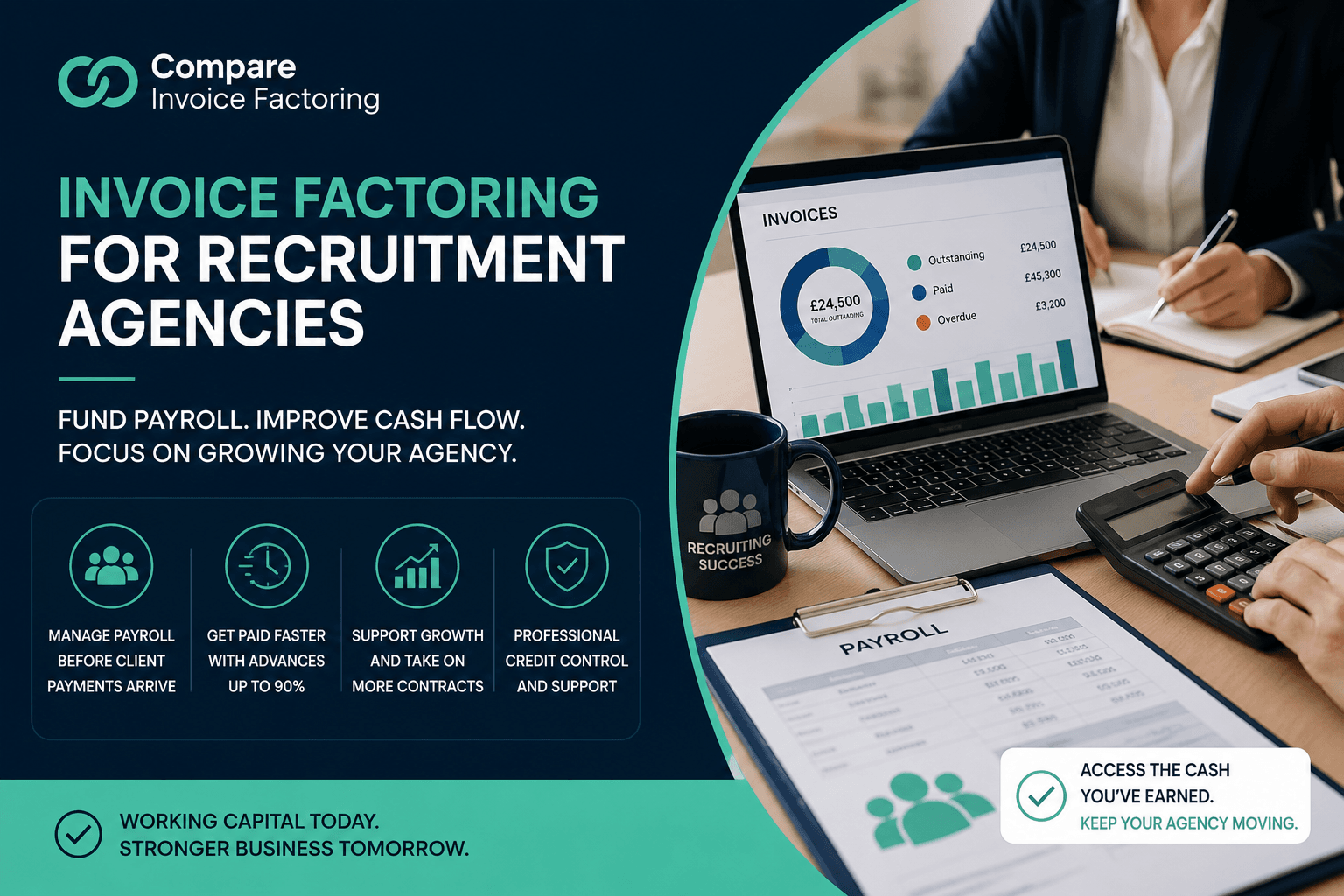
Recruitment agencies often face a cash flow gap between paying workers, contractors or internal teams and waiting for clients to settle invoices.
This can create pressure when payroll is due before client payments arrive, especially for agencies working with longer payment terms or growing placement volumes.
Invoice factoring can help recruitment agencies access funds tied up in unpaid invoices, making it easier to manage payroll, supplier payments and growth without waiting weeks or months for clients to pay.
Short answer
Invoice factoring for recruitment agencies allows an agency to access money from unpaid client invoices sooner.
Instead of waiting for clients to pay on 30, 60 or 90-day terms, the agency can receive an advance against eligible invoices. The invoice factoring provider then usually manages customer payment collection and releases the remaining balance once the client pays, after deducting agreed fees.
This can help recruitment agencies manage payroll, improve working capital and take on new contracts without being held back by delayed client payments.
Why recruitment agencies often need cash flow support
Recruitment agencies can grow quickly, but growth can also increase cash flow pressure.
An agency may need to pay temporary workers, contractors, internal staff or suppliers before clients pay their invoices. This timing gap can make it difficult to manage payroll, even when the agency is profitable and has strong sales.
Common cash flow challenges for recruitment agencies include:
- Weekly or regular payroll commitments
- Clients paying on 30, 60 or 90-day terms
- Larger contracts increasing upfront payroll pressure
- Delays between placement, invoicing and payment
- Seasonal hiring demand
- Slow-paying clients
- Limited access to traditional finance
- Growth being restricted by working capital
Invoice factoring can help bridge the gap between raising invoices and receiving client payments.
What is invoice factoring for recruitment agencies?
Invoice factoring is a type of invoice finance that allows a business to access funding against unpaid invoices.
For recruitment agencies, this usually means submitting eligible client invoices to an invoice factoring provider. The provider advances a percentage of the invoice value, giving the agency faster access to cash.
The provider then usually collects payment from the client. Once the client pays, the remaining balance is released to the agency after fees and charges are deducted.
Recruitment invoice factoring is often used by agencies that:
- Place temporary workers
- Manage contractor payroll
- Work with clients on delayed payment terms
- Need working capital to support growth
- Want to reduce time spent chasing payments
- Need more predictable cash flow
- Have reliable clients but slow payment cycles
How invoice factoring works for recruitment agencies
The exact process will vary by provider, but recruitment invoice factoring usually follows a simple structure.
The agency raises an invoice
The recruitment agency raises an invoice to the client for placement fees, temporary staffing, contractor work or agreed recruitment services.
The invoice is submitted to the provider
The agency submits the invoice to the invoice factoring provider for review and funding.
The provider advances funds
If the invoice is eligible, the provider releases an advance against the invoice value. This gives the agency faster access to working capital.
The client pays the provider
The client pays the invoice according to the agreed payment terms. In many factoring arrangements, the provider handles the collection process.
The remaining balance is released
Once the client pays, the provider deducts agreed fees and releases the remaining balance to the agency.
This process can make cash flow more predictable and reduce the pressure caused by waiting for client payments.
Why invoice factoring can suit recruitment agencies
Recruitment agencies often operate with recurring payroll obligations and delayed client payments.
This makes invoice factoring particularly relevant, because the funding is linked to the invoices the agency is already raising.
Invoice factoring may help recruitment agencies:
- Pay workers or contractors on time
- Cover payroll before clients pay
- Improve cash flow predictability
- Take on larger client contracts
- Reduce pressure on overdrafts or short-term borrowing
- Spend less time chasing invoices
- Grow without waiting for invoices to clear
- Match funding more closely to sales activity
Because the funding is based on invoices, the facility may grow as the agency raises more eligible invoices.
Payroll pressure in recruitment
Payroll is one of the biggest reasons recruitment agencies consider invoice factoring.
An agency may need to pay temporary workers or contractors quickly, while clients may take several weeks to settle invoices.
This creates a timing mismatch:
- Workers or contractors need to be paid regularly
- Clients may pay later
- The agency carries the cash flow gap in between
- Growth can increase the size of that gap
- Late client payments can create additional pressure
Invoice factoring can help reduce this pressure by giving the agency earlier access to invoice value.
Benefits of invoice factoring for recruitment agencies
Invoice factoring can offer several benefits for recruitment agencies, especially where cash flow is linked to client payment timing.
Faster access to working capital
The agency can access money tied up in unpaid invoices sooner, rather than waiting for client payment terms to complete.
Improved payroll confidence
Earlier access to cash can make it easier to meet payroll commitments and keep workers, contractors or internal teams paid on time.
Support for growth
If an agency wins a larger contract, invoice factoring can help fund the increased payroll or operating costs linked to that growth.
Reduced credit control pressure
Where the provider handles collections, the agency may spend less time chasing client payments.
Funding linked to sales
As invoice volume grows, the available funding may also increase, depending on the facility terms and provider approval.
Better cash flow visibility
A factoring facility can help make cash flow more predictable by reducing reliance on when clients choose to pay.
Costs and fees to consider
Recruitment agencies should compare invoice factoring costs carefully before choosing a provider.
Common costs may include:
- Service fees
- Discount charges
- Setup fees
- Monthly minimum fees
- Administration fees
- Credit check fees
- Same-day payment fees
- Bad debt protection fees
- Early exit charges
- Charges linked to disputed invoices
The total cost will depend on the provider, invoice values, client payment behaviour, funding level and contract terms.
A low headline rate does not always mean the facility is the cheapest overall. Recruitment agencies should ask for a full fee breakdown and a worked example based on their typical invoice values and client payment terms.
Recourse and non-recourse factoring
Recruitment agencies may be offered recourse or non-recourse invoice factoring.
Recourse factoring
With recourse factoring, the agency remains responsible if the client does not pay. This may cost less, but the agency still carries the bad debt risk.
Non-recourse factoring
With non-recourse factoring, the provider may take on more of the bad debt risk, depending on the terms of the agreement. This may cost more and may only apply to approved clients or specific circumstances.
Before choosing either option, ask the provider:
- What happens if a client does not pay?
- Which clients are covered?
- Are any invoices excluded?
- Is bad debt protection included?
- What additional fees apply?
- What conditions must be met?
The right option depends on the agency’s client base, risk tolerance and cost sensitivity.
Client relationships and collections
Invoice factoring can affect how client payments are handled.
In many factoring arrangements, the provider contacts clients and manages payment collection. This can reduce administrative pressure, but it also means the provider’s communication style matters.
Recruitment agencies should ask:
- How will clients be contacted?
- Will the provider collect under its own name?
- Can communications be reviewed?
- How are late payments handled?
- How are invoice disputes managed?
- Will the agency have visibility over collections?
- Who handles sensitive client issues?
A professional provider should manage collections carefully and protect client relationships.
Confidential options
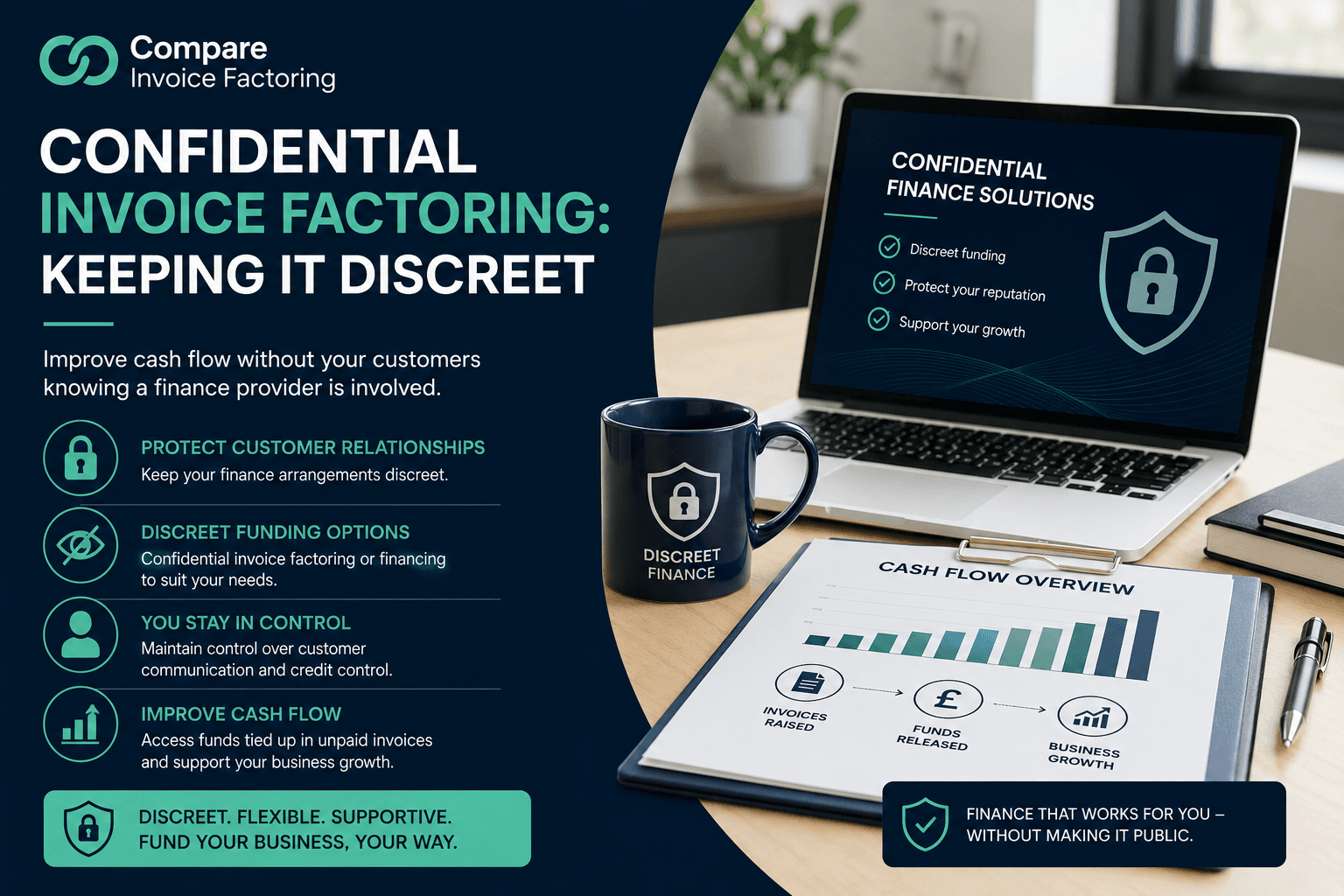
Some recruitment agencies may not want clients to know that an invoice finance provider is involved.
Traditional invoice factoring is often disclosed, meaning the client may be aware of the arrangement.
If confidentiality is important, the agency may need to consider confidential invoice finance or invoice discounting instead.
Ask providers:
- Is the facility disclosed or confidential?
- Will clients know a provider is involved?
- Are confidential options available?
- Would invoice discounting be more suitable?
- What criteria are needed for confidential finance?
Confidential options may not be available to every agency, so it is important to raise this early.
What to compare when choosing a provider
Recruitment agencies should compare more than the headline cost.
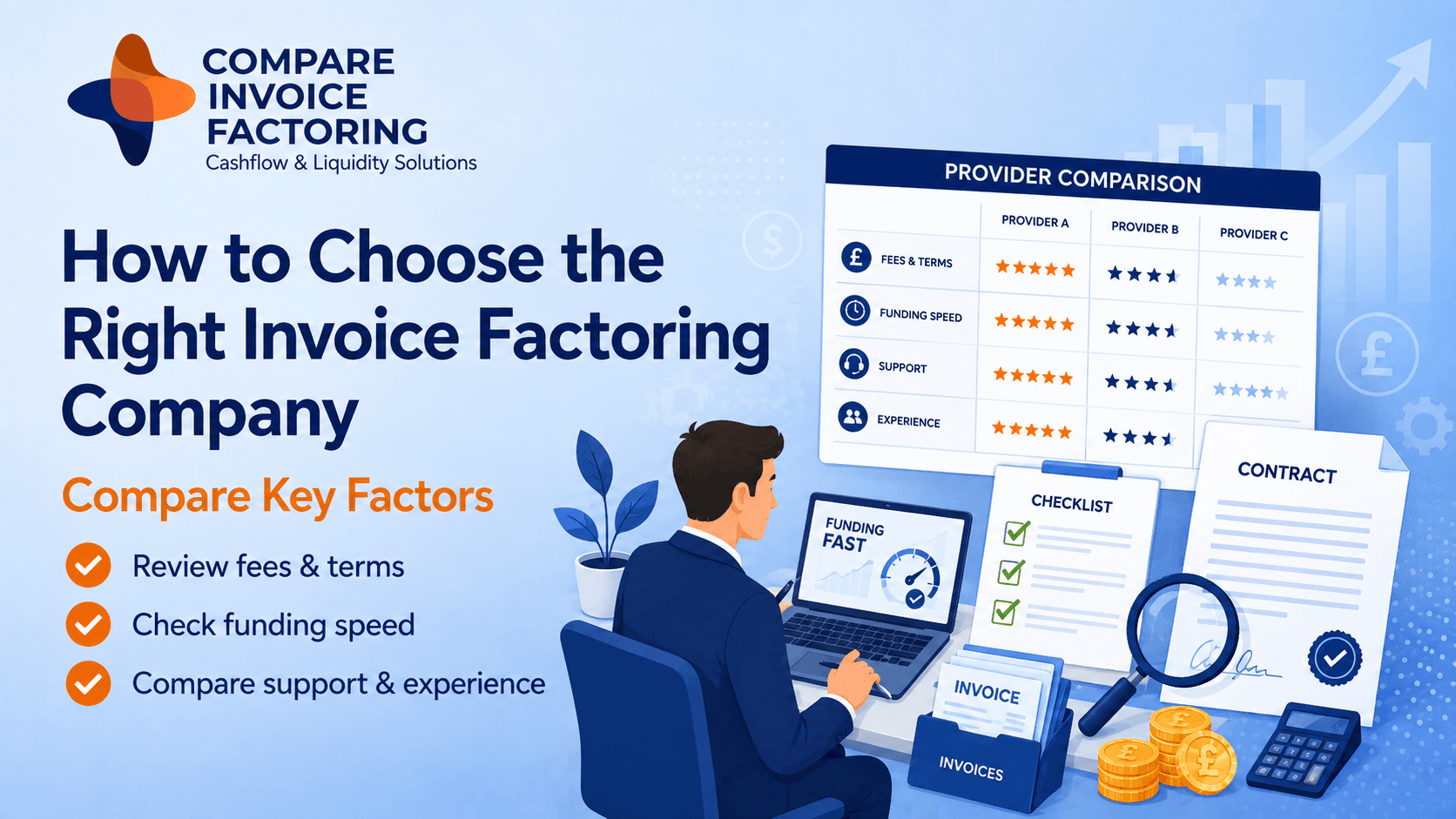
Key areas to review include:
- Funding speed
- Advance rate
- Service fees
- Discount charges
- Setup fees
- Contract length
- Notice period
- Early exit charges
- Client collection process
- Sector experience
- Payroll support understanding
- Confidential finance options
- Recourse or non-recourse terms
- Reporting and online portal quality
- Customer support
The best provider should understand recruitment agency cash flow and explain the facility clearly.
Questions recruitment agencies should ask
Before choosing an invoice factoring provider, recruitment agencies should ask practical questions about cost, service and suitability.
Useful questions include:
- Do you work with recruitment agencies?
- What types of recruitment invoices can be funded?
- What advance rate can you offer?
- How quickly can funds be released?
- What fees apply?
- Are there setup costs?
- Are there minimum monthly fees?
- How long is the contract?
- What notice period applies?
- Are there early exit fees?
- How are clients contacted?
- What happens if a client pays late?
- What happens if a client disputes an invoice?
- Do you offer recourse and non-recourse options?
- Are confidential options available?
- Can you provide a worked example?
- Will I have a dedicated account manager?
These questions help make the true cost and service level clearer before agreeing to a facility.
When invoice factoring may be useful for a recruitment agency
Invoice factoring may be useful if the agency has strong client demand but cash flow is being restricted by payment timing.
It may be suitable when:
- Payroll is due before clients pay
- Clients are on longer payment terms
- The agency is growing quickly
- Larger contracts require more working capital
- Internal credit control is taking too much time
- Traditional finance is limited
- Cash flow is unpredictable
- The agency wants funding linked to invoice activity
In these situations, invoice factoring can help the agency turn unpaid invoices into working capital sooner.
When invoice factoring may not be suitable
Invoice factoring may not be right for every recruitment agency.
It may be less suitable if:
- Clients pay quickly
- Invoice values are very low
- The agency has frequent invoice disputes
- Client relationships are highly sensitive
- The total cost is too high
- The agency does not want third-party collection involvement
- Contract terms are too restrictive
- The agency already has cheaper finance available
Before signing, compare the cost against the cash flow benefit and check whether the provider’s process fits the way the agency operates.
Invoice factoring vs other recruitment finance options
Recruitment agencies may also consider other finance options depending on their needs.
Alternatives may include:
- Invoice discounting
- Business overdrafts
- Business loans
- Payroll funding
- Revolving credit facilities
- Asset-based lending
- Improved internal credit control
- Renegotiated client payment terms
Invoice factoring may be more suitable where unpaid invoices are the main cash flow issue and the agency wants both funding and collection support.
If the agency wants to keep full control over client collections, invoice discounting may be worth considering.
FAQs
What is invoice factoring for recruitment agencies?
Invoice factoring for recruitment agencies is a funding option where an agency accesses money against unpaid client invoices. The provider usually advances funds upfront and collects payment from the client later.
Why do recruitment agencies use invoice factoring?
Recruitment agencies use invoice factoring to improve cash flow, manage payroll and reduce the pressure caused by waiting for clients to pay invoices.
Can invoice factoring help with payroll?
Yes, invoice factoring can help recruitment agencies access cash sooner, which may support payroll commitments while waiting for client invoices to be paid.
How much does recruitment invoice factoring cost?
The cost depends on the provider, invoice values, client payment behaviour, funding level and contract terms. Agencies should compare service fees, discount charges, setup fees, minimum fees and any additional charges.
Will clients know my agency is using invoice factoring?
In traditional invoice factoring, clients may know that a provider is involved because the provider usually manages collections. Confidential invoice finance or invoice discounting may be available in some cases.
Is invoice factoring suitable for new recruitment agencies?
It may be suitable for some newer agencies if they have eligible invoices and reliable clients. Approval will depend on the provider, client quality, invoice values and trading history.
What should recruitment agencies compare before choosing a provider?
Recruitment agencies should compare funding speed, advance rates, fees, contract terms, client collection process, sector experience, support quality and whether confidential options are available.
Compare invoice factoring for recruitment agencies
Invoice factoring can help recruitment agencies manage cash flow, support payroll and fund growth while waiting for clients to pay.
The right provider should understand the recruitment sector, explain costs clearly and handle client collections professionally.
Compare Invoice Factoring helps UK businesses review invoice finance options and compare providers with more confidence.
Before choosing a provider, check the full cost, contract terms, funding speed and whether the facility fits the way your agency works.
Ready to compare factoring providers?
Compare quotes from leading UK factoring providers in 60 seconds. No obligation, completely free.
Ready to Get Started?
Compare quotes from leading UK factoring providers and find the best rates for your business.
Get Your QuotesRelated Articles