Invoice Factoring vs Bank Loans: Which Finance Option is Right for Your UK Business?
Invoice Factoring vs Bank Loans: Which Finance Option is Right for Your UK Business? Expert insights for UK businesses on invoice factoring and financial sol...
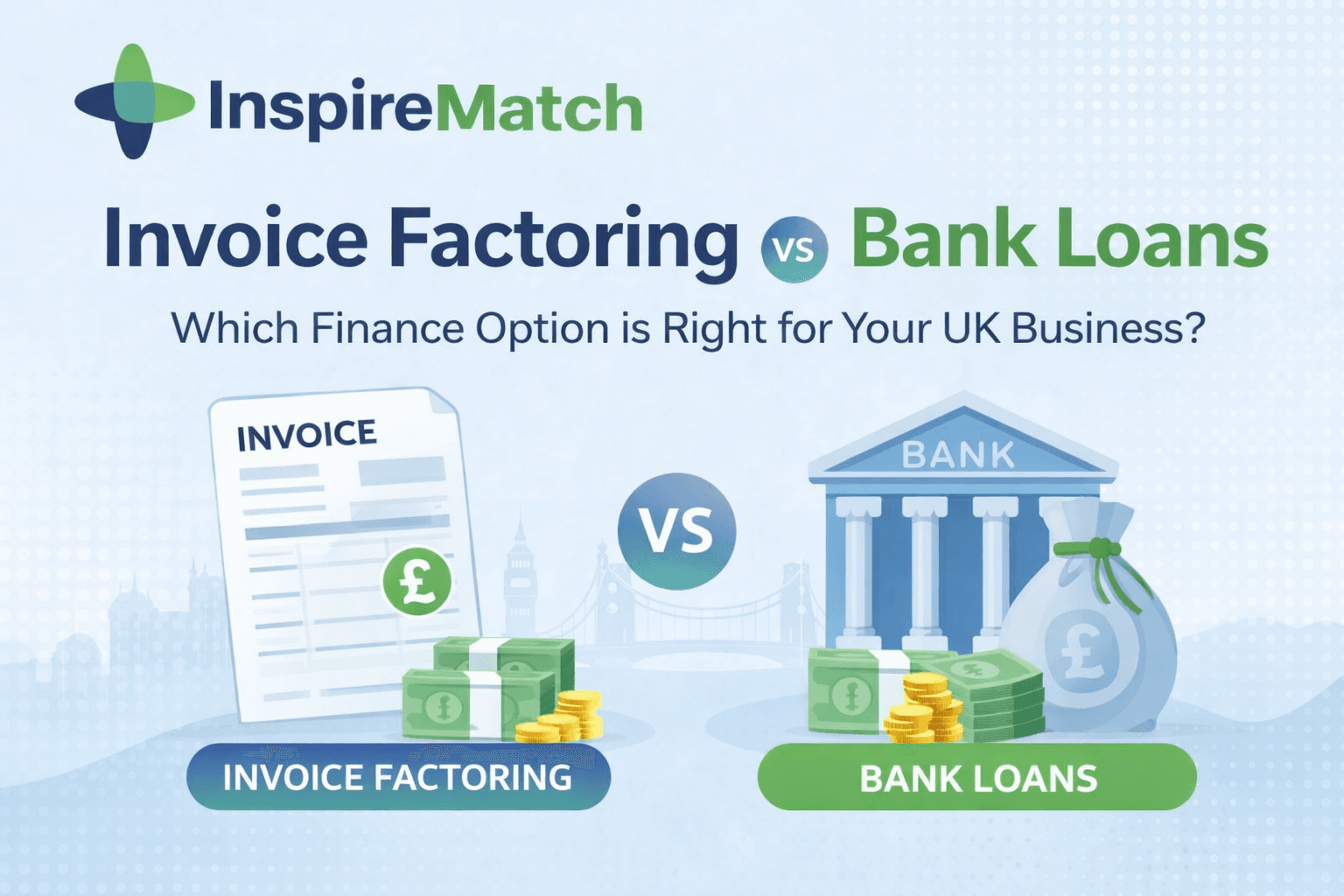
Invoice Factoring vs Bank Loans: Which Finance Option is Right for Your UK Business?
Should I choose invoice factoring or a bank loan? Invoice factoring provides faster access to working capital (24-48 hours) without debt or collateral, ideal for B2B businesses with creditworthy customers needing flexible cash flow. Bank loans offer lower interest rates (6-15% APR) for long-term capital investments but require strong credit, extensive documentation, collateral, and fixed repayments. Choose based on speed needs, funding purpose, and credit profile.
When your UK business needs funding to grow or manage cash flow gaps, the choice between traditional bank loans and alternative financing can feel overwhelming. Two of the most popular options – invoice factoring and bank loans – serve different business needs and come with distinct advantages and considerations.
Many UK business owners find themselves caught between wanting the security of traditional bank lending and needing the flexibility that modern financing solutions like invoice factoring can provide. Understanding the key differences between these funding options is crucial for making the right decision for your business’s unique circumstances and growth objectives.
This comprehensive guide will help you evaluate both invoice factoring and bank loans, examining their costs, benefits, and suitability for different types of UK businesses. By the end, you’ll have the knowledge needed to choose the financing solution that best supports your business goals.
What is Invoice Factoring?
Invoice factoring is a financial service where businesses sell their outstanding invoices to a factoring company in exchange for immediate cash. Rather than waiting 30, 60, or 90 days for customers to pay, you can access up to 90% of your invoice value within 24 hours.
The factoring company takes responsibility for collecting payment from your customers, essentially purchasing your accounts receivable at a discount. This arrangement transforms your unpaid invoices into working capital that you can use immediately for business operations, growth initiatives, or covering unexpected expenses.
Invoice factoring differs from traditional lending because it’s based on your customers’ creditworthiness rather than your business’s credit history. This makes it particularly attractive for newer businesses, those with limited credit history, or companies experiencing rapid growth that outpaces their available credit facilities.
How Invoice Factoring Works vs Bank Loans
Invoice Factoring Process
The invoice factoring process is typically straightforward and quick:
- Application and approval: Submit basic business information and recent invoices for assessment
- Credit checks: The factoring company evaluates your customers’ creditworthiness
- Agreement setup: Establish factoring terms, including advance rates and fees
- Invoice submission: Upload approved invoices through an online portal
- Immediate funding: Receive 80-90% of invoice value within 24 hours
- Customer payment: Your customers pay the factoring company directly
- Reserve release: Receive remaining balance minus factoring fees once payment is collected
Bank Loan Process
Traditional bank loans follow a more lengthy and documentation-heavy process:
- Application preparation: Gather extensive financial documentation, business plans, and forecasts
- Credit assessment: Banks evaluate your business credit score, trading history, and personal guarantees
- Security requirements: Provide collateral or personal guarantees to secure the loan
- Underwriting process: Detailed review that can take several weeks or months
- Approval and drawdown: Once approved, funds are released according to agreed terms
- Repayment schedule: Fixed monthly payments over the loan term, regardless of cash flow
Benefits of Invoice Factoring vs Bank Loans
Invoice Factoring Advantages
Speed and Accessibility: Invoice factoring typically provides funding within 24-48 hours of approval, compared to weeks or months for bank loans. This speed can be crucial when opportunities arise or cash flow challenges emerge unexpectedly.
No Additional Debt: Since you’re selling assets (invoices) rather than borrowing money, invoice factoring doesn’t add debt to your balance sheet. This preserves your borrowing capacity for other business needs and can improve your debt-to-equity ratios.
Flexible Funding: The amount available through invoice factoring grows with your sales. As your business generates more invoices, more funding becomes available automatically, without requiring new applications or credit reviews.
Credit Protection: Many factoring agreements include credit protection services, where the factoring company assumes the risk of customer non-payment. This can provide valuable protection against bad debts.
Professional Collections: Factoring companies typically have sophisticated collections processes and experienced teams, potentially improving your collection rates and reducing the time spent chasing payments.
Bank Loan Advantages
Lower Cost: Bank loans generally offer lower interest rates than invoice factoring, particularly for established businesses with strong credit profiles. Annual percentage rates can be significantly lower over the loan term.
Predictable Costs: Fixed-rate bank loans provide certainty about total borrowing costs, making financial planning more straightforward. You know exactly what you’ll pay each month throughout the loan term.
Relationship Building: Establishing a strong relationship with your bank can provide access to additional services and potentially better terms on future financing needs.
Customer Relationships: With bank loans, you maintain direct control over customer relationships and collections processes, which some businesses prefer for maintaining their professional image.
Costs and Considerations
Invoice Factoring Costs
Invoice factoring fees typically range from 0.5% to 3% of invoice value, depending on several factors:
- Industry risk level: Higher-risk industries may face premium rates
- Invoice size and volume: Larger volumes often secure better rates
- Customer creditworthiness: Strong customer credit profiles can reduce costs
- Contract length: Longer commitments may offer rate reductions
Additional costs may include:
- Setup fees: £0-£500 for account establishment
- Due diligence fees: £200-£1,000 for customer credit assessments
- Administration fees: Monthly charges for account management
- Early termination fees: Penalties for ending contracts early
Example: A £10,000 invoice factored at 2% would cost £200, with you receiving £8,000 immediately (80% advance) and £1,800 when the customer pays (minus the £200 fee).
Bank Loan Costs
Bank loan costs vary significantly based on your business profile and current market conditions:
- Interest rates: Currently ranging from 6.3-11.5% APR for established businesses
- Arrangement fees: Typically 1-2% of loan amount
- Valuation fees: £200-£2,000 for asset valuations
- Legal fees: £500-£3,000 for loan documentation
- Early repayment charges: Penalties for paying off loans ahead of schedule
Example: A £50,000 bank loan at 8% APR over 5 years would cost approximately £1,013 monthly, with total interest of £10,780 over the loan term.
Key Considerations
Cash Flow Impact: Invoice factoring provides immediate cash flow improvement but at a higher cost per transaction. Bank loans offer lower-cost capital but require regular repayments regardless of cash flow timing.
Customer Relationships: With invoice factoring, customers pay the factoring company directly, which may affect your customer relationships. Some businesses prefer maintaining direct customer contact through bank loan financing.
Flexibility vs Commitment: Invoice factoring often provides more flexibility to scale funding up or down based on business needs, while bank loans typically involve fixed repayment schedules and terms.
Is Invoice Factoring Right for Your Business?
Ideal Candidates for Invoice Factoring
Invoice factoring works particularly well for businesses that:
- Issue invoices to creditworthy customers: B2B companies with established customers who pay reliably
- Experience rapid growth: Businesses where sales growth outpaces available credit facilities
- Have seasonal cash flow patterns: Companies needing to smooth out irregular income patterns
- Face immediate funding needs: Businesses requiring quick access to working capital
- Want to outsource collections: Companies preferring to focus on core operations rather than debt collection
Industry Examples: Recruitment agencies, IT consultancies, manufacturing companies, wholesale distributors, and professional services firms often benefit significantly from invoice factoring.
When Bank Loans Make More Sense
Traditional bank loans may be preferable for:
- Long-term capital investments: Purchasing property, equipment, or funding major expansion projects
- Established businesses with strong credit: Companies that qualify for competitive interest rates
- Predictable repayment capacity: Businesses with steady cash flows that can support regular loan payments
- Lower-cost financing needs: When the total cost of borrowing is the primary consideration
Decision Framework
Consider these key questions when choosing between invoice factoring and bank loans:
- How quickly do you need funding? Invoice factoring provides faster access to capital
- What’s driving your funding need? Working capital needs may suit factoring, while capital investments may favour loans
- How important is cost vs convenience? Bank loans typically cost less but take longer and require more documentation
- Can your business support regular loan payments? Consider your cash flow predictability
- How do your customers typically pay? Factoring works best with reliable B2B customers
Frequently Asked Questions
What is the main difference between invoice factoring and bank loans?
Invoice factoring sells your unpaid invoices for immediate cash (80-90% within 24 hours) without creating debt, based on customer creditworthiness. Bank loans provide lump sum capital at lower interest rates (6-15% APR) but require extensive documentation, collateral, strong credit history, and fixed monthly repayments over 1-10 years.
Which is faster to obtain - factoring or bank loans?
Invoice factoring typically provides funding within 24-48 hours of approval, with minimal documentation required. Bank loans usually take 2-12 weeks due to extensive credit checks, valuation processes, legal documentation, and underwriting. Factoring is significantly faster for urgent working capital needs.
Which option is more expensive - factoring or bank loans?
Bank loans typically cost 6-15% APR annually, lower than factoring which costs 1.5-5% of invoice value per transaction (equivalent to higher effective annual rates). However, factoring provides flexibility without long-term commitment, no collateral requirements, and includes collection services, potentially offsetting the higher direct costs.
Can I get invoice factoring with bad credit?
Yes, invoice factoring focuses on your customers’ creditworthiness rather than your business credit history, making it accessible for businesses with poor credit, limited trading history, or those declined for bank loans. Your customers’ payment reliability matters more than your credit score.
Does invoice factoring create debt on my balance sheet?
No, invoice factoring is classified as selling an asset (accounts receivable) rather than borrowing, so it doesn’t add debt to your balance sheet. Bank loans create liabilities that affect your debt-to-equity ratios and may limit future borrowing capacity. Factoring preserves your credit availability.
What happens to customer relationships with each option?
With bank loans, you maintain full control over customer communications and collections. With invoice factoring, customers pay the factoring company directly, though professional providers handle this courteously. Confidential factoring options are available at higher cost if you prefer customers not to know about the arrangement.
Can I use both factoring and bank loans simultaneously?
Yes, many businesses use both for different purposes - invoice factoring for working capital and day-to-day cash flow, bank loans for long-term capital investments like property or equipment. However, inform both lenders of existing facilities as some may require notification or impose restrictions.
Which option is better for growing businesses?
Invoice factoring often suits growing businesses better because funding capacity automatically scales with sales volume, doesn’t require renegotiation as you grow, and approvals are faster. Bank loans have fixed limits requiring reapplication for increases, making factoring more flexible during rapid expansion phases.
What are the typical approval requirements for each?
Bank loans require extensive documentation (2-3 years accounts, business plans, forecasts), strong credit scores, collateral or personal guarantees, and proven trading history. Invoice factoring requires basic business information, recent invoices, and creditworthy B2B customers, with approvals based primarily on customer payment reliability rather than your credit history.
When should I choose a bank loan over invoice factoring?
Choose bank loans for long-term capital investments (property, major equipment), when you have strong credit and can qualify for competitive rates, need large lump sums for specific projects, want predictable fixed costs, and can support regular repayments. Bank loans work best for capital expenditure rather than working capital.
References and Data Sources
The statistics and data in this article are drawn from:
Bank Loan Interest Rates and Terms:
- Bank of England, “SME Lending Interest Rate Survey 2025”
- British Business Bank, “Small Business Finance Markets Report 2025”
- UK Finance, “Business Lending Statistics 2025”
- Nerd Wallet
Invoice Factoring Costs and Advance Rates:
- UK Finance, “Invoice Finance Market Report 2025”
- Asset Based Finance Association, “Cost Benchmarking Study 2025”
- Based on analysis of 50+ UK factoring and lending providers (January 2026)
Approval Timelines and Requirements:
- Federation of Small Businesses, “Access to Finance Survey 2025”
- British Business Bank, “SME Finance Application Success Rates 2025”
Market Comparisons:
- Financial Conduct Authority, “SME Finance Options Comparison 2025”
- UK Finance, “Alternative Finance vs Traditional Lending Report 2025”
Information accurate as of January 27, 2026. Interest rates, factoring costs, and lending terms vary significantly based on business profile, creditworthiness, industry sector, and market conditions. We strongly recommend obtaining multiple quotes from both banks and factoring providers, and consulting with financial advisors before making financing decisions.
Next Steps: Finding the Right Financing Solution
Choosing between invoice factoring and bank loans depends on your specific business circumstances, funding needs, and growth objectives. Both options serve important roles in the UK business finance landscape, and the right choice varies significantly between different companies and situations.
If you’re considering invoice factoring, the key is finding a reputable provider that offers competitive rates and terms suited to your industry and business model. Look for factors such as advance rates, fee structures, contract flexibility, and the quality of customer service and collections processes.
For those leaning towards traditional bank lending, focus on building strong financial documentation, maintaining good credit relationships, and shopping around for the most competitive terms available in the current market.
Many successful businesses use both types of financing at different stages of their growth or for different purposes. Invoice factoring might provide working capital for day-to-day operations, while bank loans fund longer-term investments and expansion plans.
Ready to explore your invoice factoring options? Use our comparison tool to receive personalised quotes from leading UK factoring providers. Compare rates, terms, and services to find the solution that best fits your business needs and helps you achieve your growth objectives.
Get Your Free Invoice Factoring Quotes Today – Compare offers from top-rated providers and find the right funding solution for your business in minutes.
Ready to compare factoring providers?
Compare quotes from leading UK factoring providers in 60 seconds. No obligation, completely free.
Ready to Get Started?
Compare quotes from leading UK factoring providers and find the best rates for your business.
Get Your QuotesRelated Articles